Stories
5 Industries in Malaysia That Need Smart Coffee Technology
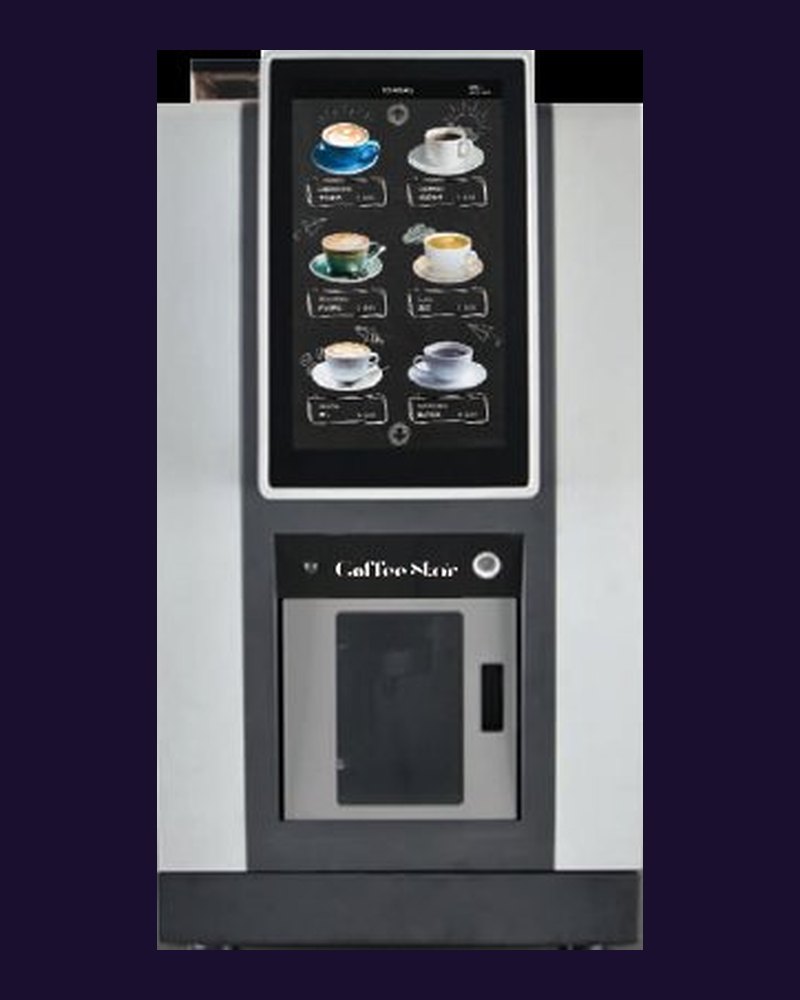
It is 7am. A nurse is coming off the night shift and wants a proper coffee. Nobody staffs a café for one person at that hour. That is the problem traditional café partnerships and vending machines never solved: café-quality espresso at every hour, in places where paying a barista makes no commercial sense. Smart coffee — fresh-bean, IoT-monitored Auto-Barista Machines — is solving it. Coffee Star already runs 114+ Auto-Barista locations in Malaysia, across hospitals, universities, airports, offices and government buildings. Five industries have proved the natural fit. Here is why each works, and what a deployment looks like.
1. Hospitals and clinics
Why it works: A hospital never closes, and neither does the need for coffee. Staff finish night shifts at 7am. Visitors waiting on patient news need somewhere that is not the cafeteria. Patients, where medically appropriate, want choice. A café staffed through every hour is rarely commercially viable in a Malaysian hospital.
What deployment looks like: Usually 1–3 Auto-Barista locations per facility: main lobby, A&E waiting area, staff rest areas. Cashless payment serves the private patient and the corporate bill for a staff coffee programme alike.
2. Universities and schools
Why it works: Students study late and early, and footfall stays steady and predictable from one academic term to the next. Faculty rooms get quality coffee without a pantry budget to defend. Several kiosks across a campus catch the corners where people actually study.
What deployment looks like: 2–6 Auto-Barista locations per campus: library, faculty buildings, student centres, sports complex. DuitNow QR and e-wallet payment match how students already spend.
3. Airports and transit hubs
Why it works: Picture the 3–6am departures, when traditional cafés are still shuttered. Or the late arrival who needs coffee before the drive home. Passengers are pressed for time, so they tolerate premium pricing. International travellers expect espresso, not instant.
What deployment looks like: Auto-Barista locations at terminal entrances, gate areas, transit lounges and arrivals halls. The interface runs in English and Bahasa Malaysia, with room for more languages for international users.
4. Corporate offices and serviced workspaces
Why it works: The office coffee programme has moved on from instant sachets and capsule machines. Malaysian corporates, especially those with ESG mandates, want fresh-bean quality without running their own café. Revenue-share deployments were built for that brief. Bean2Blossom gives the procurement decision an ESG storyline beside the price.
For the full cost comparison and a decision framework, read our complete 2026 guide to office coffee programmes in Malaysia.
5. Government buildings and GLCs
Why it works: Ministries, agencies and GLCs house large staff populations across many floors, and pantry coffee is simply expected. In a ministry, the coffee is the easy part. The paperwork is the real test. That is where Coffee Star’s 100% Bumiputera-led ownership and UNGC participation line up with government procurement requirements, and where Fairtrade certification supports the public-sector ESG mandate.
What deployment looks like: Auto-Barista locations in pantry rooms, lobby cafés and the support areas beside meeting rooms. Invoicing is built for procurement, whether the building bills centrally or per cup.
What all five have in common
- High footfall — 50+ daily cups consistently, which makes the revenue-share economics work
- Extended-hours or shift-work demand — barista staffing is impractical or uneconomic across all hours
- Quality expectation above instant — users will pay café prices for café quality
- Predictable utility infrastructure — water, power, drainage available
- Procurement decision involves more than price — quality, ESG, brand alignment all matter
How to know if your facility is a fit
A good fit is not a feeling. It is footfall, hours and a water pipe. If your premises in Malaysia ticks at least three of these boxes:
- 50+ daily potential coffee customers (staff + visitors)
- Operates beyond standard 9-to-5 (overnight, extended hours, weekends or shift work)
- Currently using instant or capsule coffee that nobody likes
- Has water connection, single-phase power, and drainage available
- Cares about ESG, sustainability, or supplier ethics
Then the next step is small. Email talktous@coffeestar.my with the subject “Site Assessment” and within 2 business days the team will arrange a free site visit, a footfall analysis and a proposal written for your building.
Every building in this piece has its own version of the 7am nurse: the student studying late, the passenger on a pre-dawn departure, the visitor waiting on news. Start with yours.
Leave a Reply