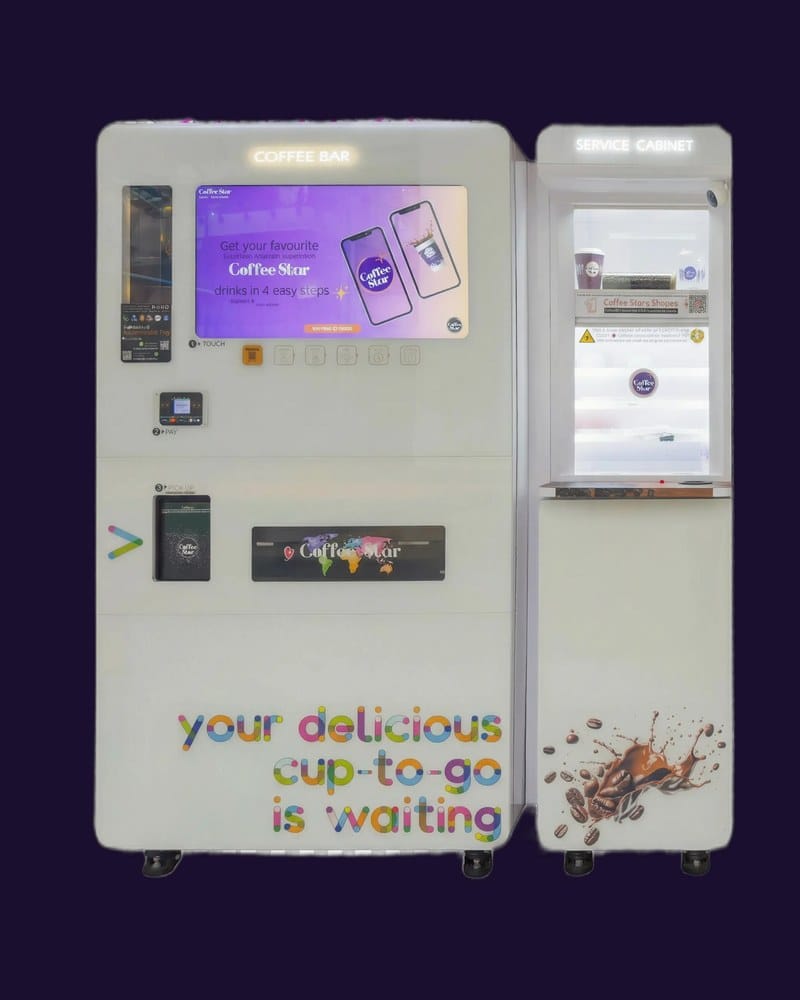
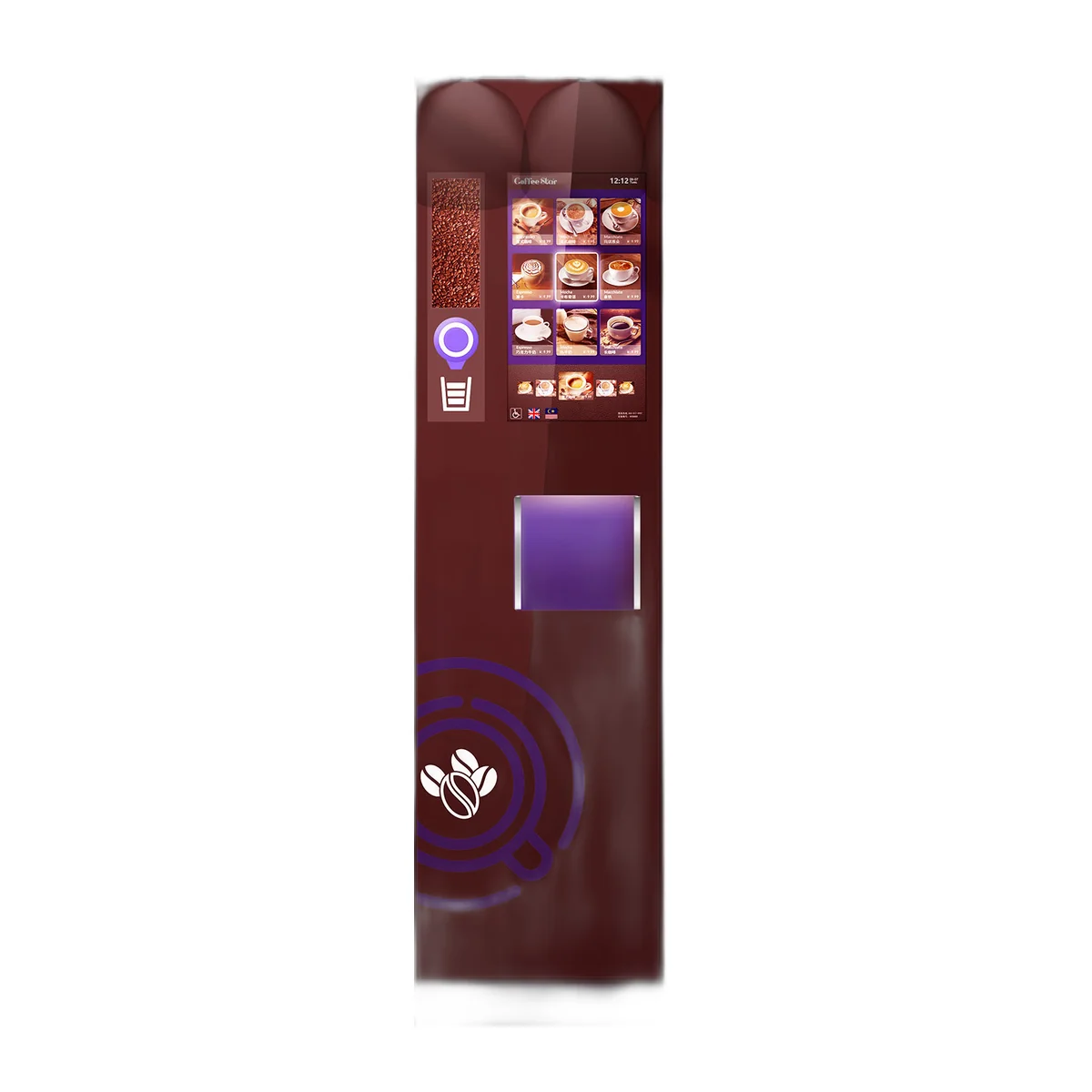
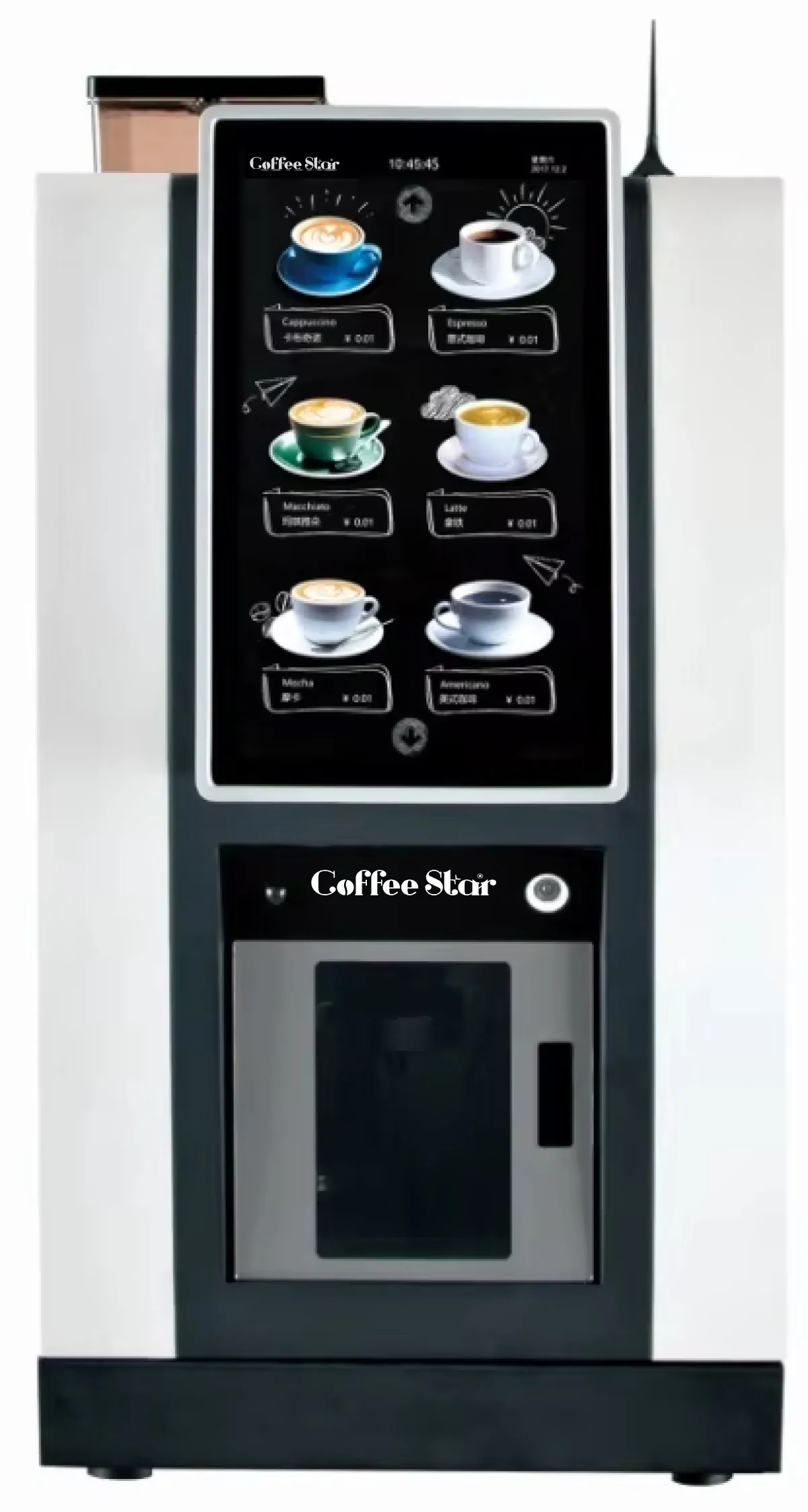
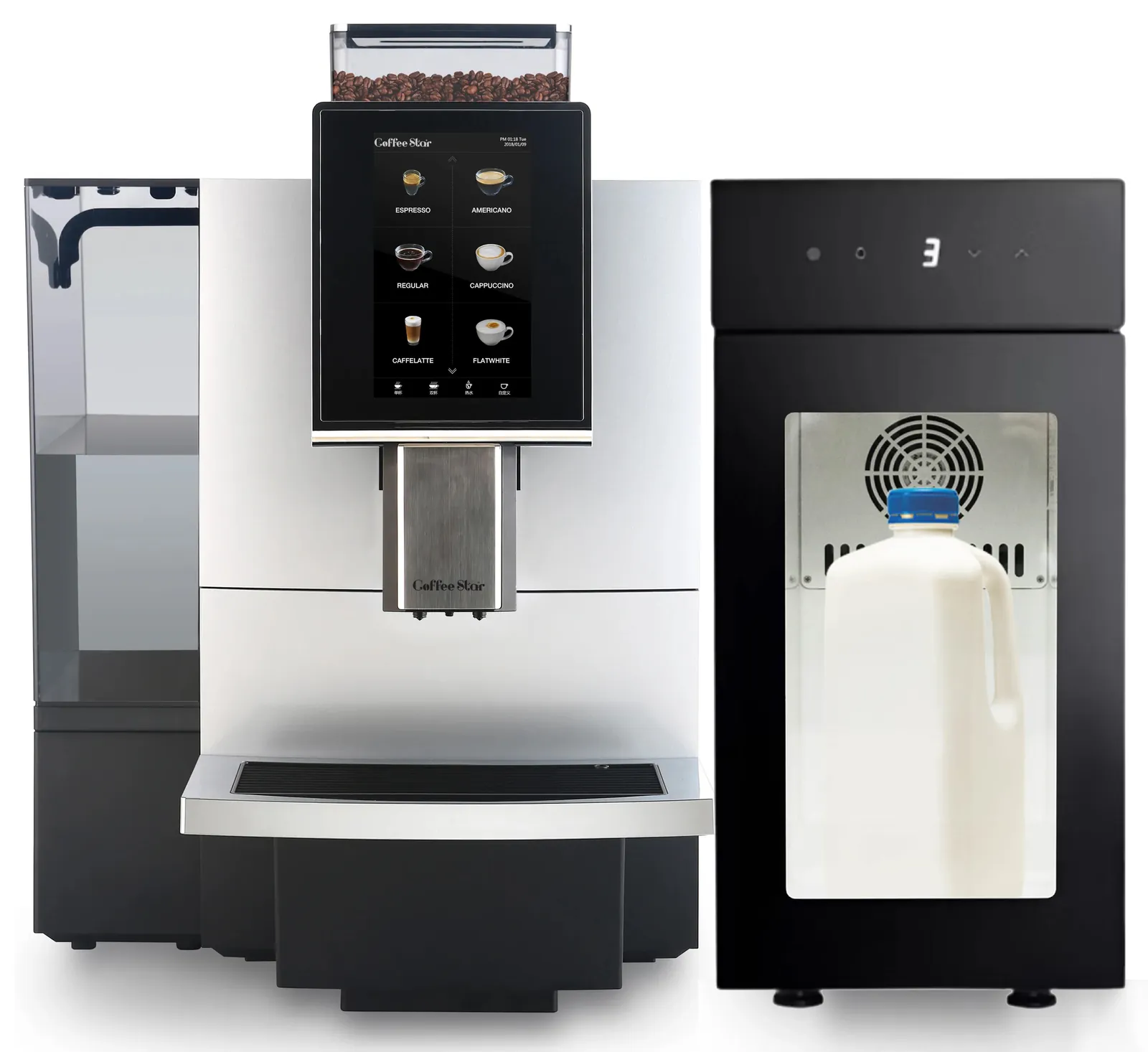
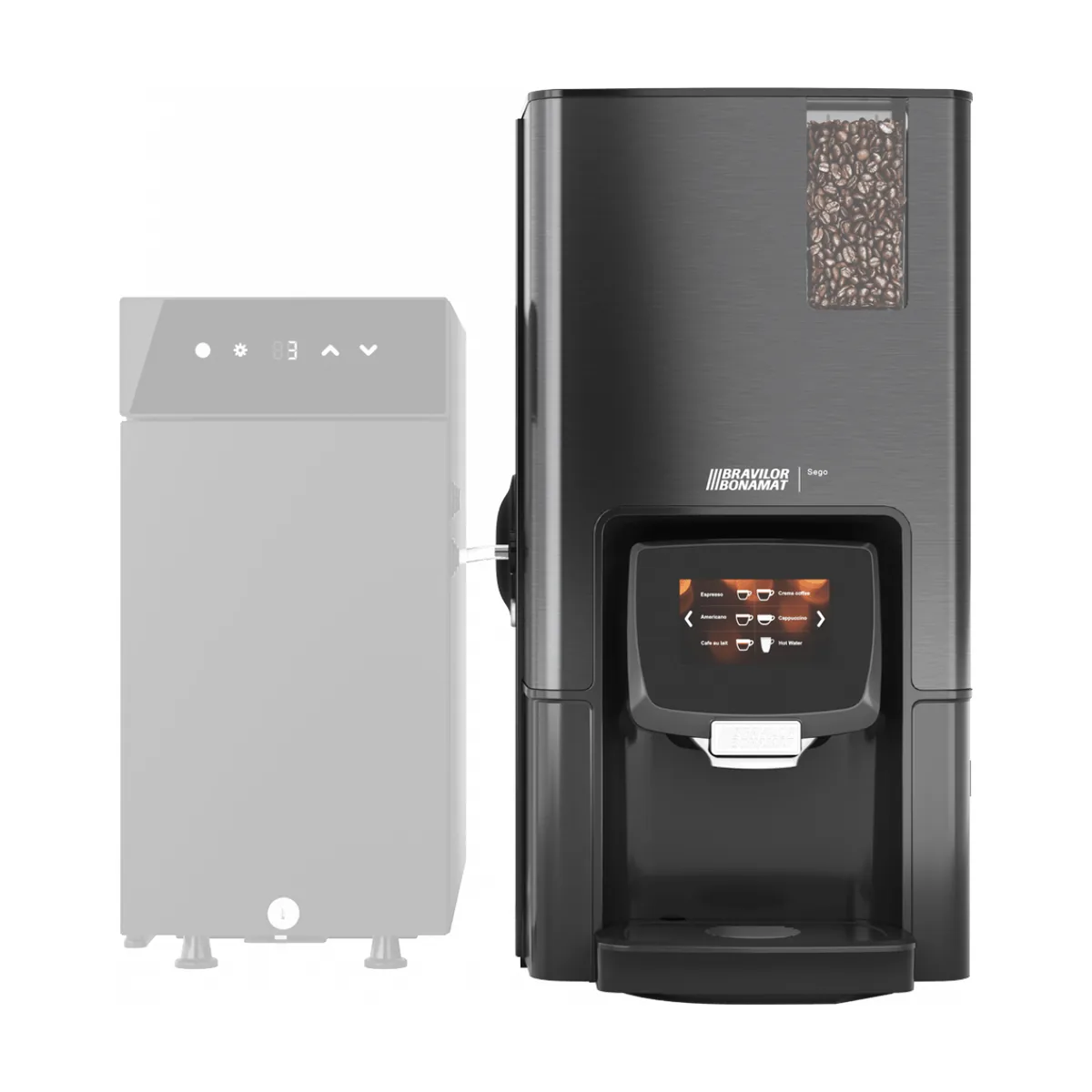
An Auto-Barista is an IoT-connected coffee machine that grinds fresh beans, pulls real espresso at 9 bar pressure, and steams milk per cup. A coffee vending machine dispenses pre-mixed powder or syrup from sealed cartridges. They look similar at a glance — both are self-service, both sit unattended in offices and public spaces — but the 7 differences below decide whether your team gets café-quality drinks or “warm milky water.” This guide is written for Malaysian B2B buyers comparing options in 2026.
The 7 differences in 30 seconds
| # | Difference | Auto-Barista | Vending Machine |
|---|---|---|---|
| 1 | Coffee preparation | Fresh-ground beans + real espresso (9 bar) | Pre-mixed powder + hot water |
| 2 | Drink quality | Café-grade | Instant-grade |
| 3 | Drink range | 8–12 espresso-based drinks | 3–6 powder mixes |
| 4 | Per-cup cost (B2B) | RM 4–8 | RM 2–4 |
| 5 | Payment | Cashless-first (QR, e-wallet, card) | Coin/note (cashless added later) |
| 6 | Maintenance | IoT predictive + weekly service | Manual refill + ad-hoc service |
| 7 | Brand experience | Branded, café-grade product | Generic dispenser |
1 · Coffee preparation — fresh-ground vs pre-mixed
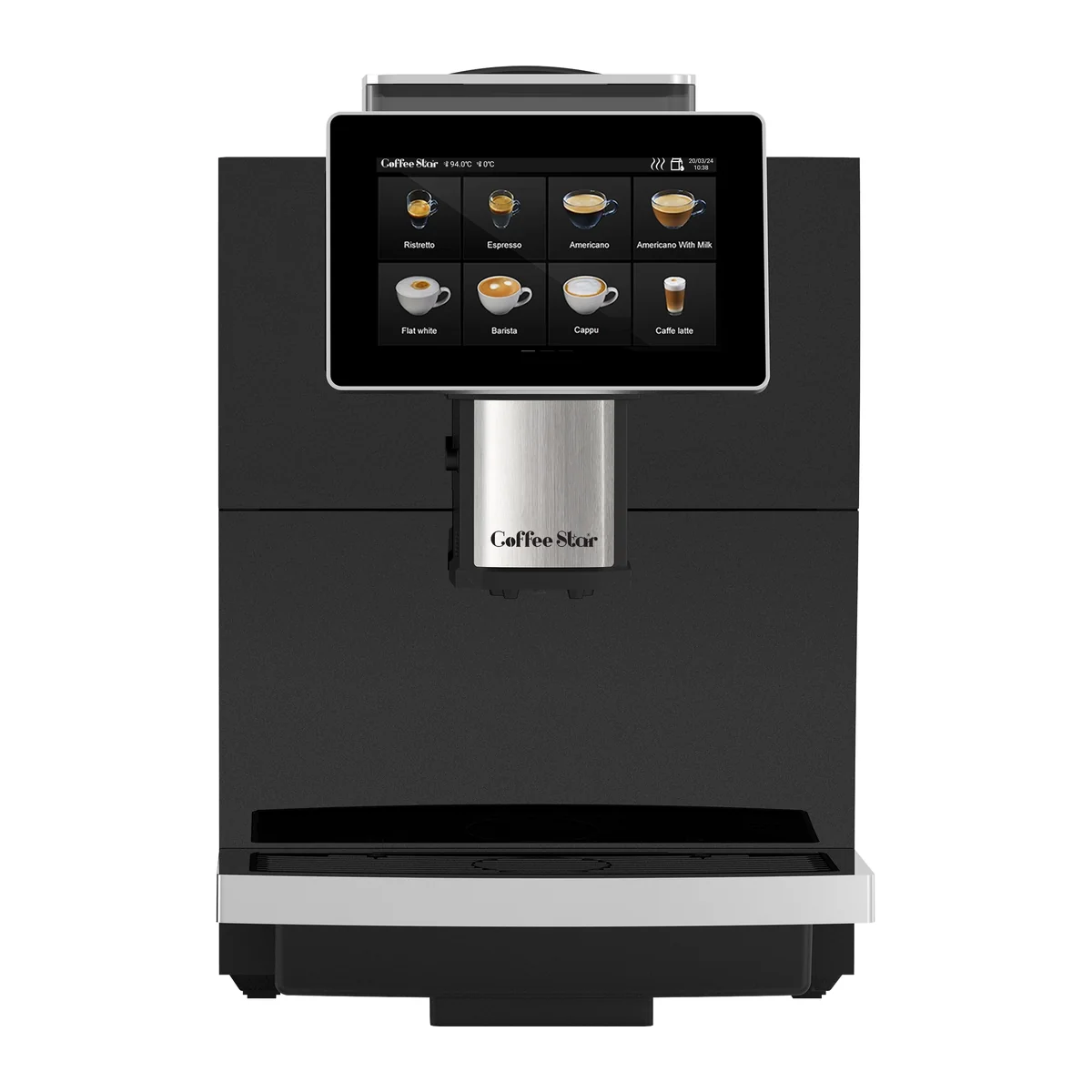
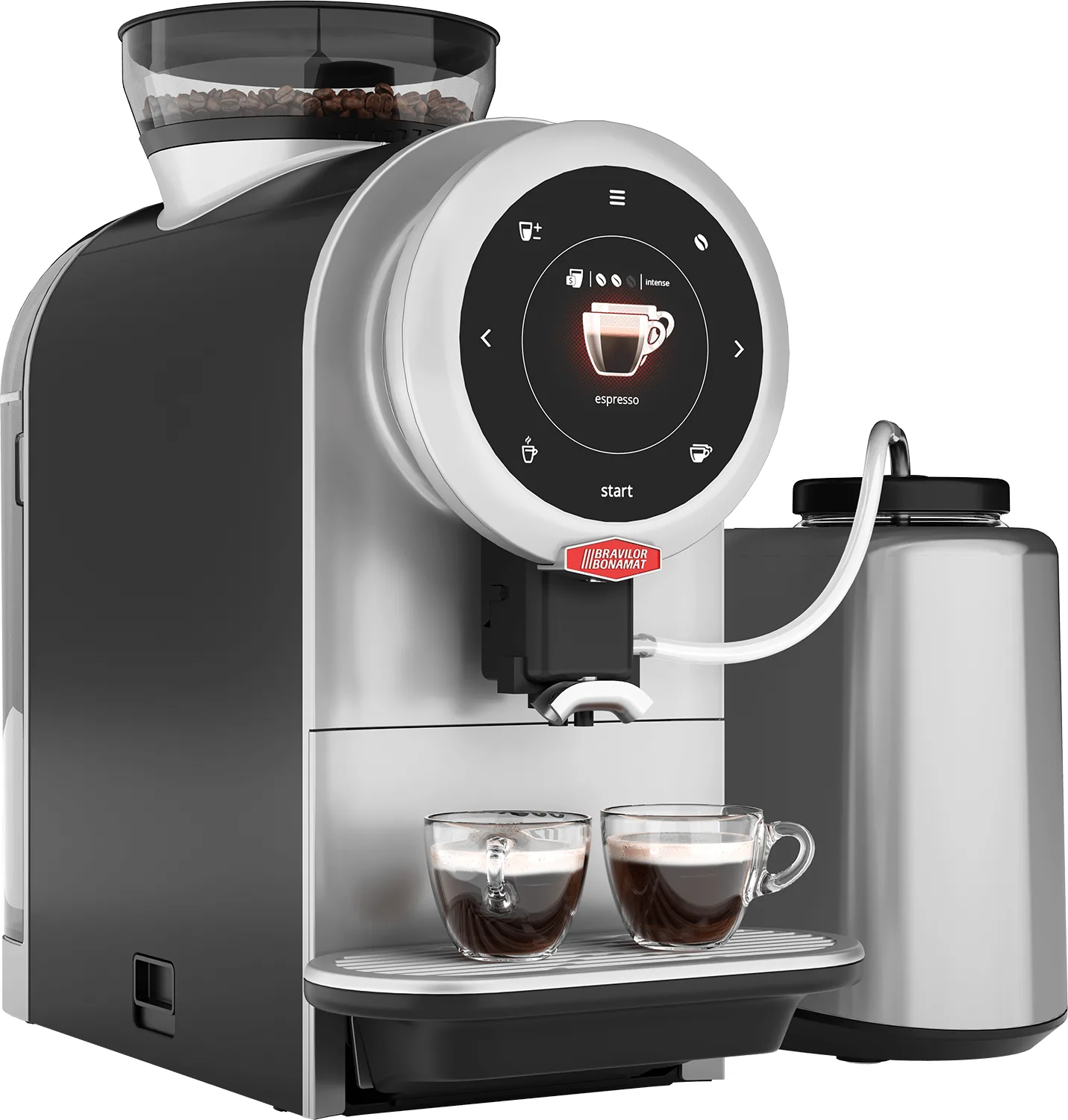
The most important difference is what’s inside the machine. An Auto-Barista has a built-in burr grinder; whole beans go in the hopper, the machine grinds the exact dose for each cup, and a 9-bar pump pulls a real espresso shot through fresh grounds. The whole cycle takes 30–60 seconds.
A coffee vending machine dispenses a pre-mixed powder (instant coffee + creamer + sugar) into a cup, then adds hot water. No grinding, no pressure, no extraction — it’s reconstituted instant coffee in a fancy housing. The cycle is faster (10–20 seconds) because there’s no actual brewing happening.
2 · Drink quality — café-grade vs instant-grade
If you’ve ever ordered a flat white from a real café and the same drink from an office vending machine, you already know the answer. Auto-Barista machines produce drinks that are 95% of café quality — the only gap is latte art and the 5% of bean-by-bean adjustment a human barista does. Vending machines produce drinks that taste like instant coffee, because they’re instant coffee. The Malaysian market norm for vending is Nescafé/3-in-1 powder mixes.
3 · Drink range — 8–12 vs 3–6
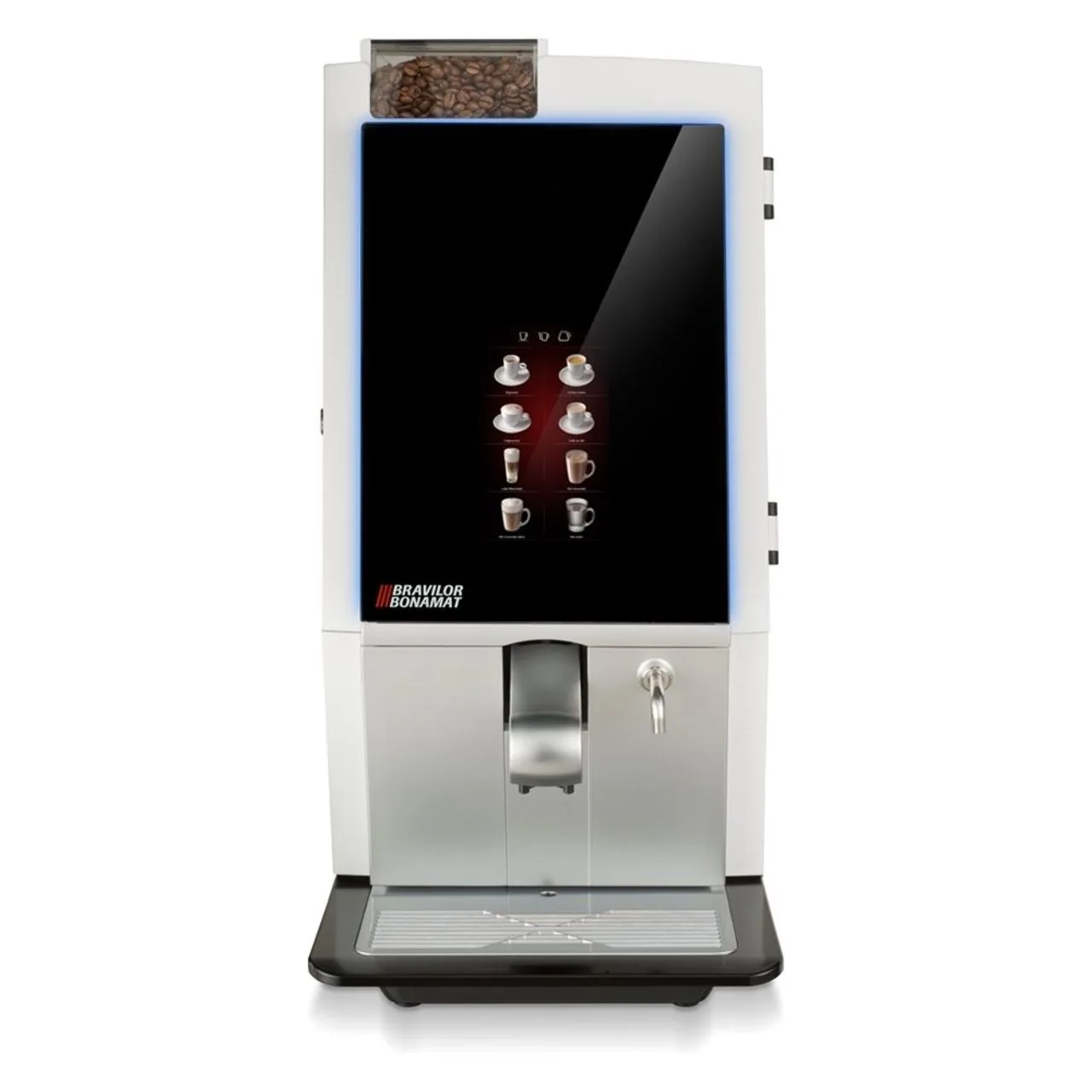
A typical Coffee Star Auto-Barista serves 8–12 drinks: espresso, double espresso, americano, long black, cappuccino, latte, flat white, mocha, hot chocolate, tea, plus 2–3 customisable hot water options. Some models add iced variants. Each drink uses real espresso + real steamed milk.
Most coffee vending machines offer 3–6 drinks: white coffee, black coffee, white tea, plus 2–3 sugar/milk levels of the same. The drinks are functionally the same powder with different ratios.
4 · Per-cup cost — RM 4–8 vs RM 2–4
This is where many buyers stop reading and pick vending. Don’t. The per-cup cost gap looks bigger than it actually is:
- Vending coffee at RM 2–4 per cup is roughly the same total cost as kettle + 3-in-1 sachets you already have in your pantry — staff just walk a bit less
- Auto-Barista coffee at RM 4–8 per cup is 50–70% cheaper than the RM 12–18 your team is currently spending at the café downstairs
- If your team buys 3 cups/week each at an outside café, you’re already at RM 36–54 per person per week — an Auto-Barista at RM 4–8/cup is the cheaper option
The right cost comparison is Auto-Barista vs café spend, not Auto-Barista vs vending machine. Vending machines compete with kettle-and-sachet. Auto-Baristas compete with café visits — and they win on both cost and convenience.
5 · Payment — cashless-first vs coin/note legacy
Coffee Star Auto-Barista machines accept DuitNow QR, GrabPay, Boost, Touch’n Go eWallet, MAE, credit/debit cards, and (where deployed) contactless tap-to-pay. Cash is optional, not primary. This matters because the average Malaysian under 35 carries no cash — they pay everything via e-wallet.
Most coffee vending machines in Malaysia are still coin/note machines with cashless added as a retrofit. You’ll regularly see staff hunting for a RM 1 coin in their drawer at 3pm. The cashless-retrofit machines often have flaky integration — payment fails mid-transaction more often than they should.
6 · Maintenance — IoT predictive vs manual refill
An Auto-Barista is an IoT device. Every machine reports bean levels, milk levels, water levels, cup counts, error codes, and brew quality in real time to a central dashboard. Coffee Star’s service team sees a “bean refill needed at Site X” alert before your staff even notice. A weekly technician visit handles deeper cleaning and parts inspection.
A typical vending machine is “dumb” — no connectivity, no telemetry. Refills happen on a fixed schedule (weekly or fortnightly) regardless of actual consumption. Service is reactive: if it breaks, someone calls the supplier. Average downtime per breakage: 2–5 business days in Malaysia.
7 · Brand experience — branded café-grade vs generic dispenser
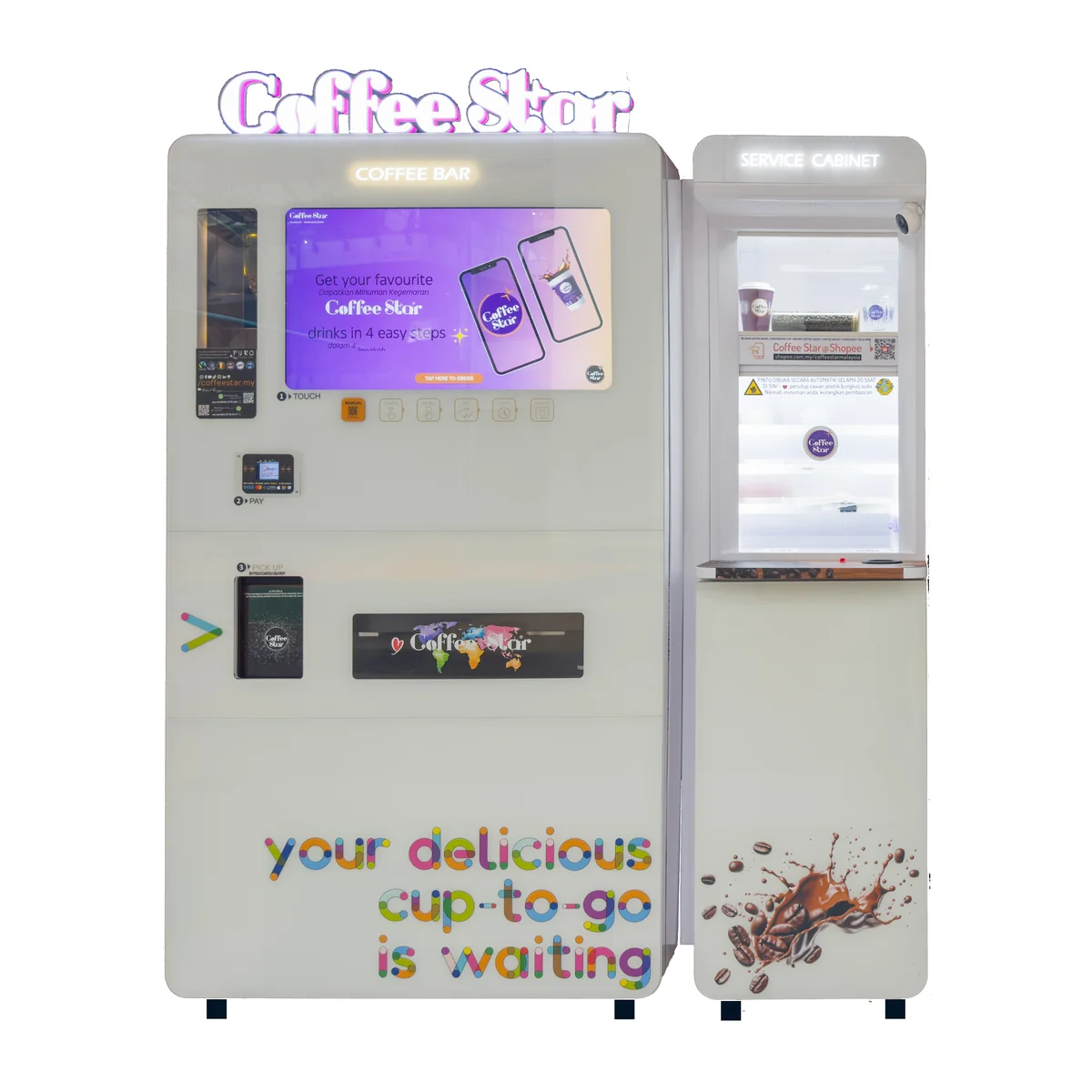
This one is harder to put a number on, but every office facilities manager understands it intuitively. An Auto-Barista is a piece of visible brand equipment — it sits in your pantry or lobby, customers and visitors interact with it, and it signals something about your company. Coffee Star machines display the host brand alongside Coffee Star branding; some clients fully white-label.
A vending machine signals “we buy the cheapest option.” That’s fine if your customers never visit your premises, but for any B2B company hosting clients or candidates, the difference between an Auto-Barista and a vending machine is the same as the difference between a meeting room and a storeroom.
When a vending machine is actually the right call
Auto-Baristas aren’t always the answer. Pick a vending machine when:
- Your site has <15 daily drinkers — fixed monthly subscription doesn’t amortise
- The location has no plumbed water and no easy manual-fill access
- You genuinely need 3-in-1 / Milo-style drinks more than espresso
- The site is a temporary deployment (event, short-term lease)
For everything else — offices with 20+ headcount, hospitals, universities, retail, government complexes, customer lounges — the Auto-Barista wins on every dimension that matters except sticker price, and the sticker price gap closes once you do the math against café spend.
Frequently asked questions
Is an Auto-Barista the same as a Coffee ATM?
Yes. “Coffee ATM” is the consumer-facing nickname for an Auto-Barista — it emphasises the 24/7 cashless self-service experience (like a bank ATM, but for café-quality coffee). See our full Coffee ATM definition.
How much does an Auto-Barista cost per month for a Malaysian office?
Coffee Star deploys Auto-Barista machines at zero upfront cost under a hosted/revenue-share model. The host provides power, water, and 1m × 1m of floor space; end users pay cashlessly per cup. Alternatively, fixed monthly subscription is available at RM 4–8 per cup billed monthly.
Will the coffee taste like a real café?
For 95% of users, yes. Coffee Star Auto-Barista machines use real espresso pressure (9 bar), fresh grinding, and steamed milk — the same fundamentals café baristas use. The 5% quality gap is latte art and per-bean adjustment, which doesn’t matter at scale.
Is Auto-Barista coffee Halal-certified?
Coffee Star uses Puro Fairtrade & Organic beans from Belgium’s oldest roaster, Miko Koffie NV (est. 1801) — pure coffee with no animal-derived ingredients. We are Pembayar Zakat (PPZ-MAIWP). Milk options include UHT dairy and plant-based (oat, soy, almond) for dietary preferences.
What happens when the Auto-Barista runs out of beans or milk?
The machine’s IoT sensor reports stock levels in real time. Coffee Star’s service team auto-schedules refills before stockouts. During predictable peak periods (Monday mornings, exam weeks for universities, conference season for hospitality), we pre-stage additional supplies.
What’s the upgrade path from vending to Auto-Barista?
If you currently have a vending machine and want to upgrade: email us with your current vendor + contract end date. We typically deploy the Auto-Barista 1 week before your vending contract expires so there’s zero gap. The vending machine vendor handles their own removal.
The bottom line
If your team’s coffee budget today is purely “the kettle and 3-in-1 sachets” — a vending machine is a minor upgrade. If your team is buying café coffee anywhere off-premises, an Auto-Barista is cheaper AND better. The 7 differences above compound: better coffee + more drink variety + cashless payment + IoT reliability + brand experience all stack into one decision.
Coffee Star operates 114+ Auto-Barista locations across Malaysia today — offices, hospitals, universities, airports, government complexes. Email us with your site type and expected daily cup count for a free site assessment, or read more about our deployment models.
Leave a Reply