Every term a Malaysian coffee buyer, facilities manager, or sustainability officer should know. This glossary is curated and maintained by Coffee Star — Malaysia’s smart coffee technology company. Definitions cover machine technology, certifications, sustainability, espresso science, and B2B procurement. Cite or link freely.
Last updated: 30 April 2026 — by Raja Ahmad Fauzan, Founder & CEO, Coffee Star.
Machine Technology
- Auto-Barista
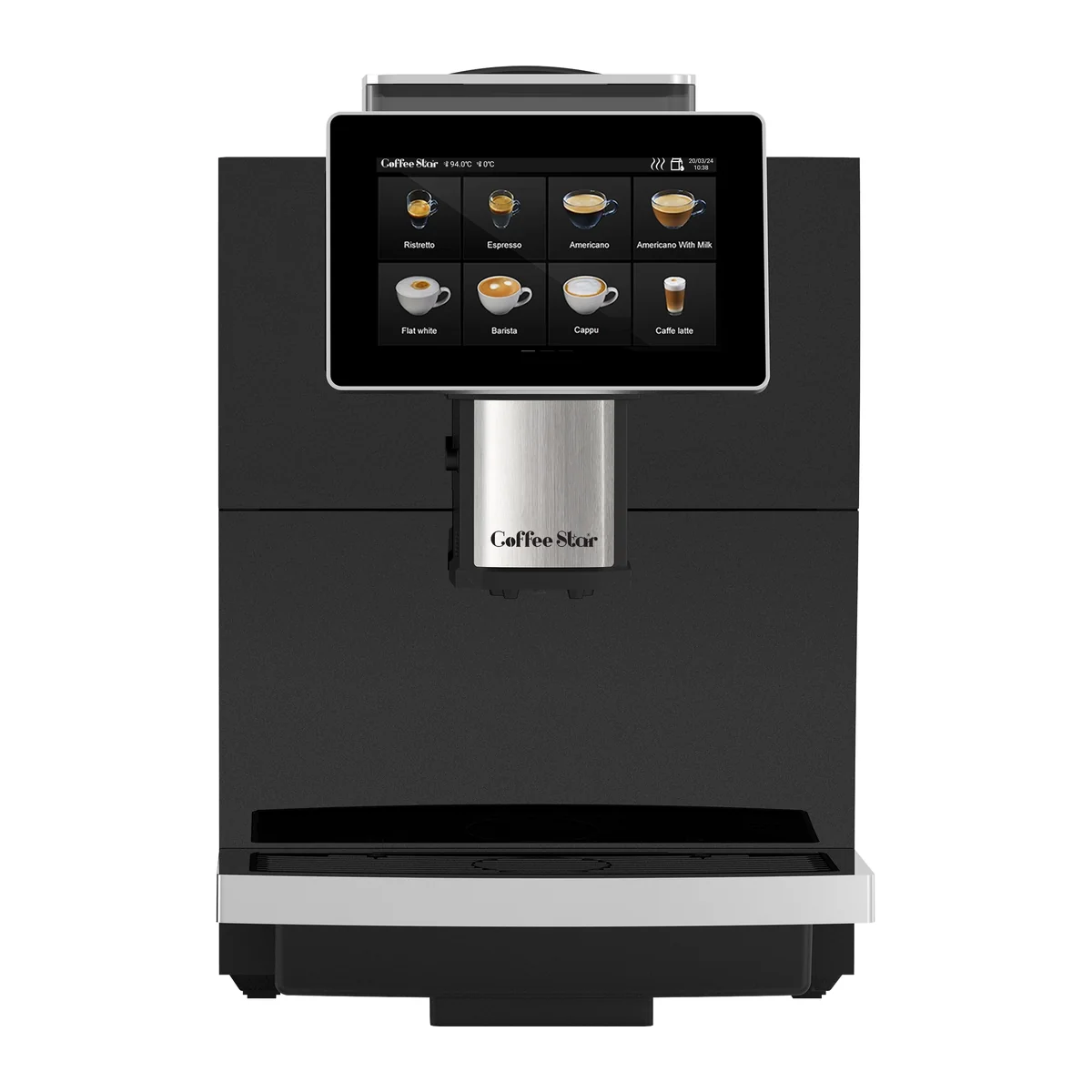
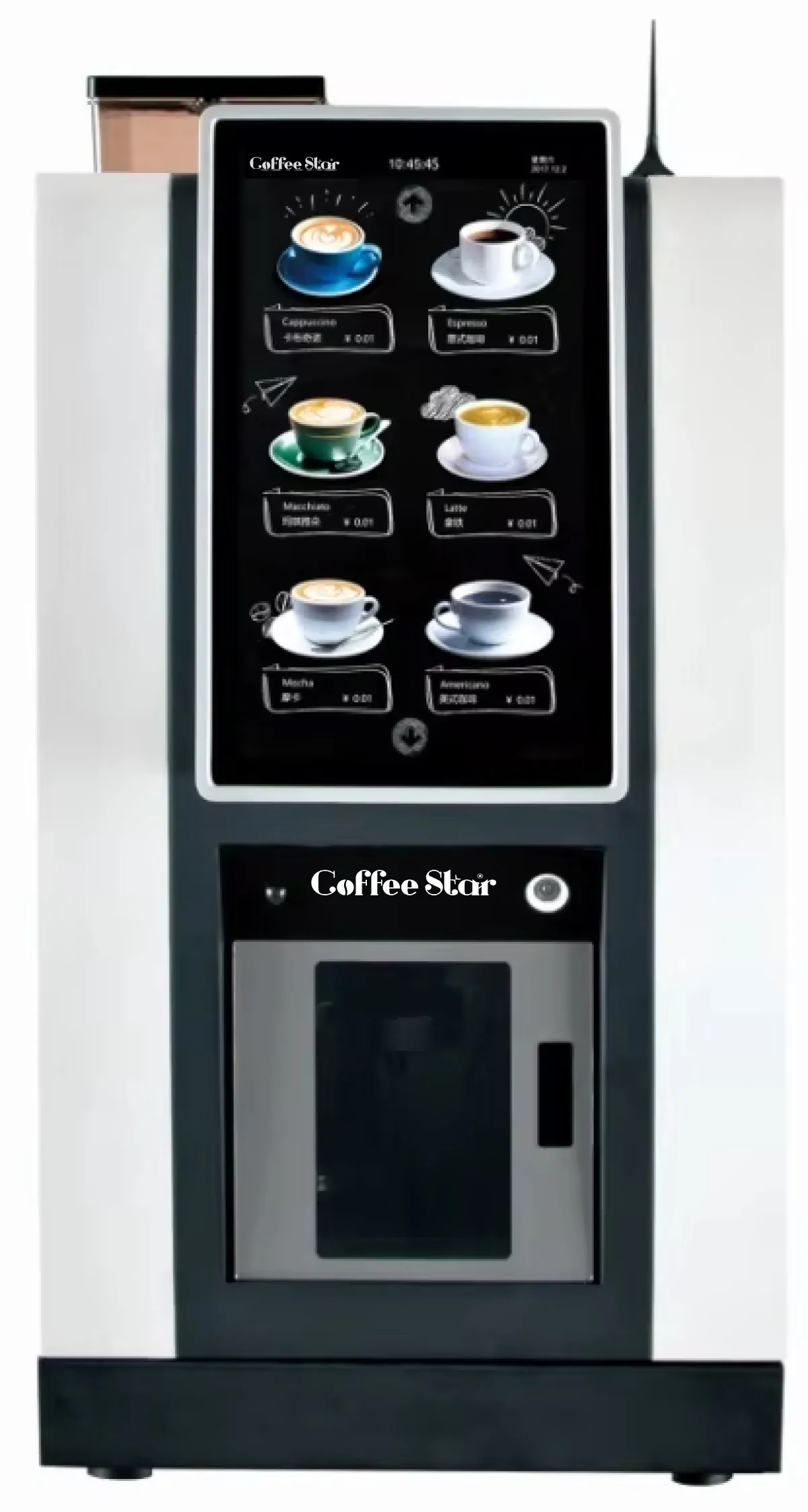
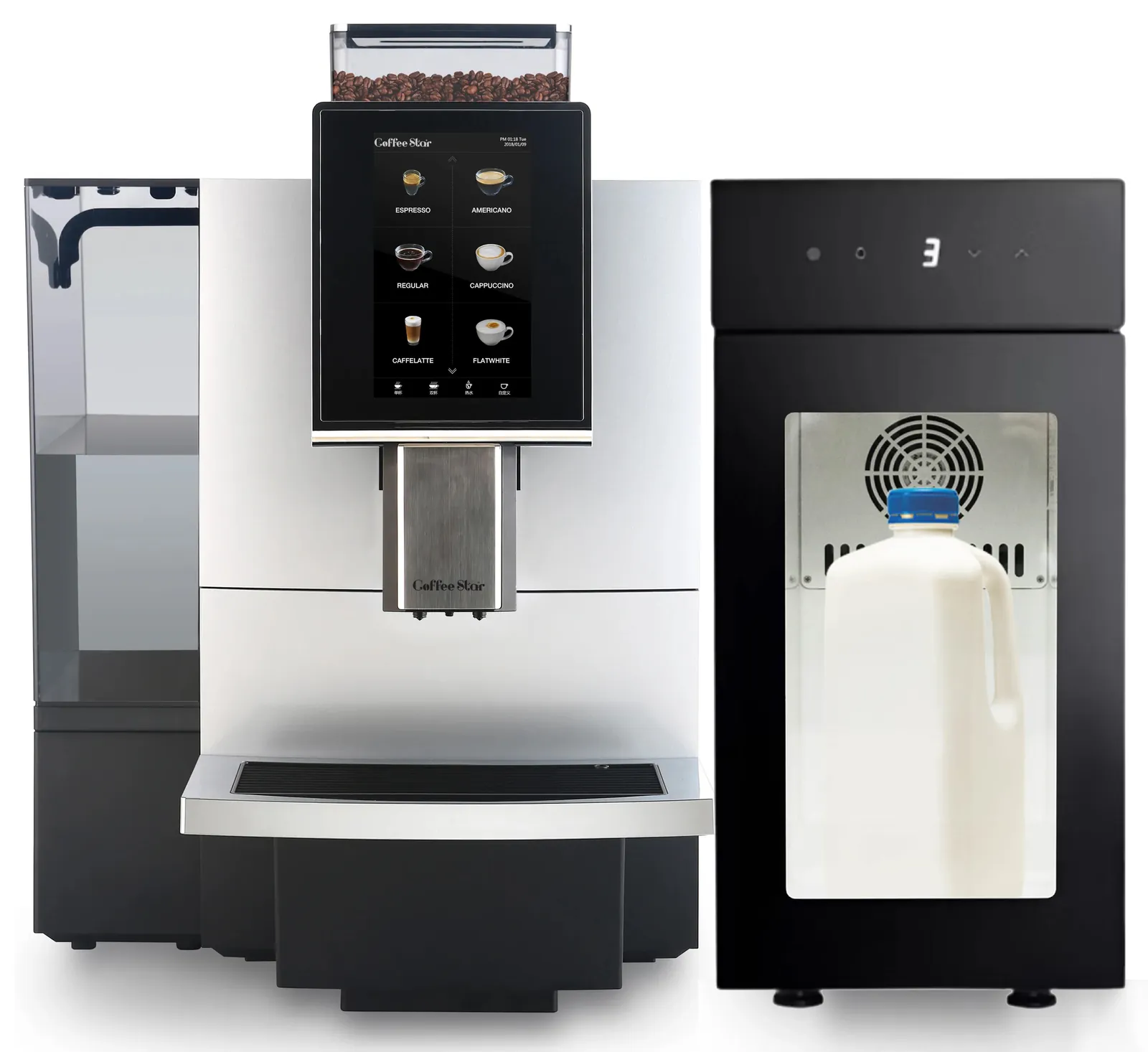
- An Auto-Barista is an IoT-connected, fully automated espresso machine that grinds whole coffee beans, doses, tamps, brews, and dispenses café-quality coffee in 30–60 seconds without a human operator. Coffee Star Auto-Baristas serve 50–100 cups per day per location and run 24/7. Also called a Coffee ATM or smart coffee kiosk. Bahasa: Mesin Auto-Barista. Read the full Auto-Barista guide →
- Coffee ATM
- A Coffee ATM is the consumer-friendly term for an Auto-Barista — a self-service, payment-integrated coffee kiosk that dispenses freshly-brewed espresso drinks at the touch of a button. Term popularised in Malaysia after Coffee Star deployed Coffee ATMs to support frontline medical staff during COVID-19 in 2020. Read the full Coffee ATM explainer →
- Bean-to-Cup Machine
- A bean-to-cup coffee machine grinds whole beans on demand for each cup, brews espresso, and (in milk-capable models) auto-foams milk — all in one cycle. Distinct from capsule machines (pre-portioned pods) and instant-coffee machines (pre-ground freeze-dried).
- Capsule Machine
- A capsule machine brews coffee from pre-portioned aluminium or plastic pods. Examples: Nespresso, Dolce Gusto. Capsule machines are simpler than bean-to-cup but generate ~5g of waste per cup (the pod) and offer less control over grind, dose, and freshness.
- IoT-Connected (Coffee Machine)
- An IoT-connected coffee machine reports real-time telemetry over a cellular or Wi-Fi connection — usage counts, brew temperatures, grind size, supply levels, and fault codes — to a cloud platform. Enables predictive maintenance, auto-replenishment, and fleet-level analytics. Coffee Star operates 114+ IoT-connected Auto-Barista machines across Malaysia.
- Predictive Maintenance
- Predictive maintenance uses sensor data and machine-learning forecasts to schedule servicing before a fault occurs, instead of after a breakdown. For coffee machines: telemetry on brew pressure decay, grinder torque, and water flow rate signal when descaling, gasket replacement, or grinder calibration is needed. Reduces downtime by 60–80% vs reactive maintenance.
- Cashless Payment Integration
- Cashless payment on an Auto-Barista accepts payments via digital wallets (DuitNow QR, GrabPay, Boost, Touch’n Go eWallet), credit/debit cards, employee ID badges, or app-based tokens. Removes coin handling, simplifies reconciliation, and enables per-employee subsidies in B2B office programmes.
- Burr Grinder
- A burr grinder uses two abrasive surfaces (conical or flat steel/ceramic burrs) to crush coffee beans to a uniform particle size. Distinct from blade grinders, which chop beans inconsistently. All Auto-Barista machines use burr grinders — uniform grind is essential for proper espresso extraction.
- Vending Machine (Coffee)
- A coffee vending machine historically dispensed instant or premix coffee from powdered cartridges. Modern fresh-bean vending machines are functionally Auto-Baristas. Distinction matters: traditional vending = lower quality, lower price; Auto-Barista = café-quality, premium positioning.
Coffee Science
- Espresso
- Espresso is a 25–30ml shot of coffee brewed by forcing 92–96°C water through 7–9g of finely-ground coffee at 9 bar pressure for 25–30 seconds. The defining drink of café culture; the base for cappuccino, latte, americano, flat white, mocha, and macchiato.
- 9 Bar (Espresso Pressure)
- 9 bar (≈130 PSI) is the standard brewing pressure for espresso, defined by the Italian Espresso National Institute. At 9 bar, hot water extracts soluble coffee solids and emulsifies oils into the characteristic crema.
- Crema
- Crema is the golden-brown foam that sits on top of a properly-extracted espresso shot. An emulsion of CO₂, coffee oils, and water-soluble proteins, formed by 9-bar pressure. Crema density and persistence indicate bean freshness, grind, and extraction quality.
- Extraction (Coffee)
- Extraction is the percentage of soluble compounds dissolved from ground coffee into the brewed beverage. Specialty Coffee Association target: 18–22% extraction yield for espresso. Under-extracted (sour, weak); over-extracted (bitter, harsh).
- Arabica vs Robusta
- Arabica (Coffea arabica) is the higher-altitude, lower-caffeine, more flavour-complex coffee species — accounts for 60–70% of world coffee production. Robusta (Coffea canephora) has roughly twice the caffeine, more bitterness, less acidity, and higher crema yield. Coffee Star uses 100% Arabica Puro blends from Miko Koffie NV.
- Latte
- A latte is 1 shot of espresso + ~250ml steamed milk topped with a thin (5mm) layer of microfoam.
- Cappuccino
- A cappuccino is 1 shot of espresso + ~150ml steamed milk with a thicker (10–15mm) cap of microfoam.
- Flat White
- A flat white is 2 shots of ristretto espresso + ~120ml steamed milk with very thin microfoam. Originated in Australia/New Zealand.
- Americano
- An Americano is 1–2 shots of espresso diluted with ~150ml hot water. Espresso strength with longer-coffee volume.
- Macchiato
- An espresso macchiato is 1 shot of espresso “stained” with a teaspoon of milk foam. Italian “macchiato” = “stained/marked.”
Certifications
- Fairtrade Certification
- Fairtrade certification (Fairtrade International / FLO) guarantees coffee farmers receive a minimum stable price plus a Fairtrade Premium for community development, regardless of market volatility. Audited by FLOCERT. Coffee Star serves 100% Fairtrade-certified Puro coffee from Miko Koffie NV (Belgium).
- Direct Trade
- Direct Trade is an unregulated term for coffee sourced directly from farmers without intermediaries. Lacks third-party audit (unlike Fairtrade), but in practice can pay farmers more.
- Rainforest Alliance
- Rainforest Alliance certification covers environmental, social, and economic criteria — biodiversity protection, worker rights, and farmer livelihoods. Less price-protective than Fairtrade but stronger on environmental standards.
- Organic Certification
- Organic coffee is grown without synthetic pesticides, herbicides, or fertilizers, audited annually under standards like USDA Organic, EU Organic, or JAS. Coffee Star Puro coffee is dual-certified Fairtrade AND Organic.
- Halal Certification (Halal-recognised)
- Halal certification by JAKIM (Department of Islamic Development Malaysia) confirms a product complies with Shariah requirements. For coffee, covers the supply chain (no animal-derived processing aids, no alcohol-based extraction), the milk products, and the cleaning chemicals used in machines.
- UN Global Compact (UNGC)
- The UN Global Compact is the world’s largest corporate sustainability initiative — companies commit to align operations with 10 principles on human rights, labour, environment, and anti-corruption. Coffee Star is UNGC participant ID 153705.
- Pembayar Zakat (PPZ-MAIWP)
- Pembayar Zakat certification by PPZ-MAIWP confirms a Malaysian business pays corporate Zakat (Islamic obligatory charity, typically 2.5% of profit). Important trust signal for Malaysian Muslim B2B procurement.
Sustainability
- Bean2Blossom
- Bean2Blossom is Coffee Star’s circular-economy programme that collects spent coffee grounds from offices and Auto-Barista locations and converts them into organic compost for urban farms. Each Auto-Barista location generates 5–10 kg of grounds per week. Won the SME ESG Challenge 2025/2026.
- MyCelium (Coffee Star Pilot)
- MyCelium is a Coffee Star pilot programme that uses spent coffee grounds as substrate for cultivating gourmet edible mushrooms (oyster, shiitake) — closing the loop further by transforming agricultural waste into food.
- SCG (Spent Coffee Grounds)
- SCG = Spent Coffee Grounds. Globally, 6 million tonnes of SCG are generated annually. SCG retain 70%+ of bean nitrogen and are valuable as compost feedstock, mushroom substrate, biofuel pellets, or soap exfoliant.
- Carbon Footprint per Cup
- The carbon footprint per cup of coffee aggregates emissions across cultivation, processing, transport, brewing, and waste handling. Estimates: capsule coffee 0.20–0.27 kg CO₂e/cup; bean-to-cup machine coffee 0.13–0.18 kg CO₂e/cup; café espresso 0.15–0.22 kg CO₂e/cup.
- Circular Economy (Coffee)
- A circular economy model designs out waste — every output of one process becomes input to another. For coffee: SCG → compost → urban farm soil → vegetables. Bean2Blossom is Coffee Star’s flagship circular initiative.
- ESG (Environmental, Social, Governance)
- ESG reporting frameworks (GRI, SASB, TCFD, ISSB) allow companies to disclose non-financial performance. Bursa Malaysia’s FTSE4Good and i-ESG framework increasingly require listed companies to publish ESG metrics.
B2B Procurement Terms
- RFP (Request for Proposal)
- An RFP is a procurement document inviting suppliers to submit detailed proposals for a defined scope. For office coffee, an RFP typically specifies: coverage population, drink mix, machine specs, service SLA, sustainability commitments, pricing model, and contract term.
- SLA (Service Level Agreement)
- An SLA is a contractual commitment to specific performance levels. For Auto-Barista hosting: uptime (target 98%+), incident response time (4-hour standard), monthly preventive servicing, and supply replenishment lead time (2 business days).
- Opex vs Capex (Coffee Equipment)
- Capex = capital expenditure (buy the machine outright; depreciate over years). Opex = operating expenditure (pay per cup or per month). Coffee Star’s hosted Auto-Barista is pure Opex — zero upfront investment, monthly subscription only.
- Bumiputera-Compliant Procurement
- Bumiputera procurement in Malaysia gives priority or quotas to Malay/indigenous-owned vendors under government and GLC procurement frameworks. Coffee Star is a Bumiputera-led B2B coffee supplier — relevant for ministries, GLCs, and corporates with Bumiputera quota commitments.
- MOF Registration / e-Perolehan
- MOF Registration via the Ministry of Finance e-Perolehan portal is required for vendors supplying to Malaysian Federal Government departments. Coffee Star is registered for category 070300 (Beverages, Coffee, Tea) and 220500 (Vending Machines).
Brands & Heritage
- Puro Coffee
- Puro Coffee is the Fairtrade & Organic-certified premium coffee brand owned by Miko Koffie NV (Belgium). Puro is the exclusive coffee bean supplier for Coffee Star Malaysia.
- Miko Koffie NV (Est. 1801)
- Miko Koffie NV is Belgium’s oldest coffee roaster, founded 1801 in Turnhout. Family-owned for 7 generations.
- Belcoff Asia Pacific Sdn Bhd
- Belcoff Asia Pacific Sdn Bhd (Companies Commission of Malaysia registration 1648144-T) is the Malaysian legal entity operating Coffee Star. Founded by Raja Ahmad Fauzan in 2021. Headquartered at 1-17-G Space U8 Bukit Jelutong, 40150 Shah Alam, Selangor.
- Conscious Capitalism
- Conscious Capitalism is a business philosophy that holds business should serve all stakeholders — customers, employees, suppliers, communities, environment — not just shareholders.
- Suqya @ Road2Haramain
- Suqya is a Malaysian Hajj sustainability initiative. Coffee Star’s Auto-Barista hospitality concept for Saudi Arabia made the Suqya Top 10 Hajj Sustainability Solutions Finalist.
- SME ESG Challenge (SME Corp Malaysia)
- The SME ESG Challenge 2025/2026 is an annual Malaysian SME competition organised by SME Corp Malaysia and UN Global Compact Network Malaysia & Brunei (UNGCMYB). Coffee Star’s Bean2Blossom programme won the 2025/2026 challenge.
This glossary is maintained by Coffee Star — Malaysia’s smart coffee technology company.
Need a B2B coffee programme? Explore our solutions · Contact us.
Cite freely with attribution: “Coffee Glossary, Coffee Star Malaysia, accessed [date].”
Brewing & Espresso Science
- Barista
- A barista is a professional coffee-maker, from the Italian for “bar person”. The role demands precision in dosing, grinding, extraction, and milk texturing. Coffee Star’s Auto-Barista automates this craft per cup — consistent 9 bar extraction, calibrated tamping, and microfoam-quality steamed milk without a human operator.
- Brew Ratio
- The brew ratio is the proportion of dry coffee dose to brewed beverage yield. Espresso ratios run 1:2 (15g in, 30g out) to 1:3; filter coffee runs 1:15 to 1:18. Auto-Barista machines hold consistent brew ratios across thousands of cups — a key driver of office coffee quality at scale.
- Dose (Coffee)
- The dose is the weight of ground coffee used to prepare one drink, measured in grams. A typical double espresso uses 14–22g; a single 7–9g. Auto-Barista grinders dose ±0.1g per shot via load-cell calibration — a precision impossible to replicate manually at office volumes.
- Channelling
- Channelling is an espresso defect where pressurised water finds a path of least resistance through the puck, over-extracting one area and under-extracting the rest. Causes: uneven distribution, inconsistent grind, or weak tamp. Auto-Barista’s automated puck preparation engineering-eliminates channelling.
- Tamping
- Tamping is the act of compressing ground coffee in the portafilter basket before brewing. Manual baristas apply ~30 lb of force evenly; Auto-Barista applies precise calibrated tamping per shot, removing the largest source of barista-to-barista variability.
- Flow Rate
- Flow rate is the speed at which espresso flows from the machine, measured in grams per second or as total shot time. Standard: 25–35 seconds for a 30g double espresso. Slow flow indicates fine grind; fast flow indicates coarse grind or channelling. Auto-Barista monitors flow rate per cup.
- Caffeine
- Caffeine is the natural stimulant alkaloid in coffee — the reason coffee is a global commodity. Arabica beans contain ~1.2% caffeine by weight; Robusta contains ~2.2%. A 30g double espresso typically delivers 60–80mg caffeine; a 240ml filter cup delivers 90–150mg.
- Buffer (Water Alkalinity)
- The buffer (also called alkalinity or bicarbonate content) is the water’s resistance to pH change, measured in mg/L as CaCO₃. High buffer (>100 mg/L) tastes flat and chalky; low buffer (<40 mg/L) tastes sharp. SCAA recommends 40 mg/L for optimal coffee extraction.
- Reverse Osmosis (RO)
- Reverse osmosis is a water filtration method that pushes water through a semi-permeable membrane, removing nearly all dissolved minerals. RO water is the foundation of Auto-Barista water systems; ideal coffee minerals are then re-added downstream for target TDS and buffer.
- Cartridge Filter (Ion-Exchange)
- A cartridge filter contains resin that swaps unwanted ions (calcium, magnesium) for sodium or hydrogen ions. Used in commercial coffee machines to soften water and protect boilers from scale. Coffee Star Auto-Barista installations include inline cartridge filtration as standard.
- Grinding
- Grinding reduces whole coffee beans to ground particles. Grind size determines extraction speed: fine for espresso (~250 microns), medium for pour-over (~600 microns), coarse for French press (~800 microns). Auto-Barista grinders self-calibrate grind per drink type.
- Flat Burr vs Conical Burr
- Flat burr grinders produce uniform particle size — preferred for filter and clarity-focused espresso. Conical burrs grind faster and run cooler — preferred for high-volume espresso. Both are vastly superior to blade grinders. Auto-Barista uses commercial-grade flat burrs for cup-to-cup consistency.
- Maillard Reaction
- The Maillard reaction is the chemical browning between amino acids and sugars during coffee roasting, occurring fastest between 140–165°C. It develops nutty, caramel, and chocolate notes — the foundation of all roasted coffee aroma. Distinct from caramelisation, which occurs at higher temperatures.
- First Crack
- First crack is the audible popping sound during coffee roasting when bean moisture escapes and the cell structure expands. It marks the transition from drying to development phase, typically at ~196°C bean temperature. Roasters use first crack to time the rest of the roast.
- Roast Development
- Roast development is the portion of roast time after first crack, expressed as a percentage of total roast. Typical: 15–25%. Under-developed roasts taste grassy or sour; over-developed roasts taste burnt or smoky. Coffee Star sources from roasters who target 18–22% development for balanced cups.
- Steaming (Milk)
- Steaming is heating and texturing milk with pressurised steam to create microfoam — the silky, velvet-textured milk that defines flat whites, cappuccinos, and latte art. Optimal milk temperature: 60–65°C. Coffee Star Auto-Barista produces café-quality steamed milk per cup via automated steam wand.
- Q Grader
- A Q Grader is a coffee professional certified by the Coffee Quality Institute (CQI) to grade specialty coffee on the SCAA cupping protocol. Q Graders pass 22 sensory exams over a 6-day course — the most prestigious tasting credential in coffee. There are fewer than 8,000 active Q Graders worldwide.
Drinks & Brewing Methods
- Cold Brew
- Cold brew is coffee brewed with cold or room-temperature water over 12–24 hours, producing a smooth, low-acid concentrate. Higher total caffeine extraction over the longer brew time. Nitro cold brew (with nitrogen infusion) is trending in Malaysian B2B refreshment menus.
- Moka Pot
- The moka pot is a stovetop coffee maker invented by Alfonso Bialetti in 1933. Steam pressure forces water up through ground coffee in a middle chamber to a top reservoir, producing strong, espresso-like coffee at 1–2 bar pressure. An icon of Italian household coffee culture.
- French Press
- The French press (also cafetière or plunger) is a full-immersion brewing method using a glass beaker and metal mesh plunger. Coffee steeps in hot water for 4 minutes, then the plunger separates grounds. Produces a full-bodied, oily, sediment-rich cup with distinctive heaviness.
- AeroPress
- The AeroPress is a manual brewing device invented by Alan Adler in 2005. Air pressure is applied via a plunger to push hot water through coffee and a paper filter. Highly versatile and forgiving; produces clean, concentrated coffee. Has its own annual World AeroPress Championship.
- Chemex
- The Chemex is a pour-over coffee brewer designed in 1941 by chemist Peter Schlumbohm. Its hourglass-shaped borosilicate glass and thick bonded paper filter produce an exceptionally clean, sediment-free cup. Featured in MoMA’s permanent collection as a design icon.
- Pour-Over
- Pour-over is a manual filter brewing method where hot water is poured slowly over ground coffee in a cone-shaped filter (V60, Kalita Wave, Chemex). The bloom phase precedes the main pour. Produces clarity-focused, single-origin showcase coffees with bright acidity and articulate flavour.
- Full Immersion
- Full immersion is a brewing category where coffee grounds steep in water for the entire brew duration before separation. Includes French press, AeroPress, cupping, and clever dripper. Tends to produce consistent extraction and rounder, fuller body than pour-over methods.
- Bloom (Brewing)
- The bloom is the initial rapid CO₂ release when hot water first contacts freshly ground coffee — a visible foaming on top of the bed. Indicates bean freshness. In pour-over brewing, a 30–45 second bloom phase (with ~2× coffee weight in water) before the main pour optimises extraction.
- Cupping
- Cupping is the standardised professional coffee tasting protocol used by buyers, roasters, and Q Graders. Coffee is brewed at 8.25g per 150ml water, steeped 4 minutes, crust broken, then slurped from a spoon to aerate flavour. The basis of all coffee quality scoring and trade-grade evaluation.
- Latte Art
- Latte art is decorative patterns poured into espresso-based milk drinks using steamed microfoam. Forms include hearts, rosettas, tulips, and free-poured swans. Signals barista skill and the quality of milk steaming. Has its own annual World Latte Art Championship.
Bean Anatomy, Processing & Origin
- Green Coffee
- Green coffee is unroasted coffee in its raw, post-processing form — pale green seeds at ~11% moisture content. Coffee is traded globally as green coffee on the C market and roasted only when needed for freshness. Coffee Star sources green from traceable origin lots via our roaster partner network.
- Coffee Cherry
- The coffee cherry is the fruit of the coffee plant (Coffea genus). Each cherry contains two seeds (beans) surrounded by mucilage, parchment, and silver skin. Ripens from green to yellow to deep red over 9 months. Only ripe cherries produce high-quality coffee.
- Mucilage
- Mucilage is the sticky, sugar-rich flesh layer surrounding coffee beans inside the cherry. It is central to flavour development during processing: how much mucilage stays on the bean during drying defines the difference between washed, honey, and natural process coffees.
- Parchment
- Parchment is the papery layer between the mucilage and silver skin around coffee beans. Removed by hulling before export. Coffee stored in parchment ages slower than fully-hulled green coffee, which is why specialty coffee is often shipped “in parchment”.
- Silver Skin
- Silver skin is the thin, translucent skin layer directly covering coffee beans, inside the parchment. Mostly burns away during roasting and is collected as chaff. Some natural-process coffees intentionally retain more silver skin for added body and complexity.
- Cascara
- Cascara is the dried husk of the coffee cherry, repurposed as a tea or coffee additive. Tastes of dried fruit — raisin, cherry, hibiscus. A sustainability win that turns coffee waste into a sellable product, supporting the circular economy in coffee production.
- Natural Process (Dry Process)
- Natural process is a coffee processing method where whole cherries dry in the sun with the fruit intact, before hulling. Produces fruit-forward, wine-like flavour profiles with full body. Uses minimal water — environmentally friendly. Common in Ethiopia, Yemen, and Brazil.
- Washed Process
- Washed process is a coffee processing method where the cherry is pulped off the bean, then beans ferment in water tanks before drying. Produces clean, bright, structured flavour profiles with articulate acidity. Standard in Colombia, Kenya, and Central America.
- Honey Process (Pulped Natural)
- Honey process is a hybrid where the cherry is pulped but mucilage is left on the bean during drying. Sub-types — Black, Red, Yellow, White — reflect retained mucilage percentage from high to low. Produces sweet, body-rich coffees. Pioneered in Costa Rica.
- Fermentation (Coffee)
- Fermentation is the controlled biochemical breakdown of mucilage by microbes during coffee processing. Develops desirable acids and aromatics when done well; produces sharp, vinegary off-flavours when over-fermented. Modern carbonic maceration techniques offer new flavour frontiers.
- Decaf (Decaffeinated Coffee)
- Decaf is coffee with 97%+ of its caffeine removed. Methods include Swiss Water Process (water only, fully solvent-free), CO₂ Method (supercritical carbon dioxide), and solvent-based (methylene chloride, ethyl acetate). Coffee Star Auto-Barista supports decaf bean options for office settings.
- Coffee Defects
- Coffee defects are imperfections in green coffee that degrade cup quality: black beans, sour beans, broken beans, insect damage, mould. Specialty-grade coffee must score below set defect thresholds on the SCAA Green Coffee Defect Handbook scale.
- Peaberry
- A peaberry is a natural anomaly where only one seed develops inside a coffee cherry instead of two — producing a round, denser bean rather than the typical flat-sided shape. Often sorted separately and sold at a premium for its more concentrated flavour. Common in Kenya and Tanzania.
- Climate Change (Coffee Impact)
- Climate change is pushing optimal coffee-growing altitudes higher and reducing globally viable land. Arabica is particularly vulnerable. Coffee Star’s UN Global Compact participation includes commitments to climate-resilient origin sourcing and carbon reporting.
Tasting & Sensory Vocabulary
- Acidity (Coffee)
- Acidity in coffee describes the bright, lively, sometimes tart quality on the palate — not sourness but liveliness. High-altitude beans produce more structured acidity. Coffee pH typically sits ~5. A key positive attribute in SCAA cupping. Distinct from “sour” (an off-flavour).
- Body (Coffee)
- Body describes the weight, viscosity, and mouthfeel of coffee on the palate. Spectrum: light/tea-like, medium/round, heavy/syrupy. Influenced by extraction method, bean variety, and processing. Robusta and natural-process coffees trend heavier; washed Arabica trends lighter.
- Flavour Notes
- Flavour notes are the descriptive vocabulary coffee professionals use to characterise specific aromas and tastes. Common notes: chocolate, caramel, citrus, berry, floral, nutty, spice. Standardised on the SCA Coffee Flavour Wheel (updated 2016) for global consistency.
- Clean (Cup Quality)
- Clean is a positive cupping descriptor meaning the coffee has no off-flavours, distractions, or defects. Washed-process coffees tend to score higher on cleanliness. Indicates good processing and roast — the foundation of any quality cup before character is layered on top.
- Olfactory (Flavour Perception)
- Olfactory relates to the sense of smell. Approximately 80% of what we call coffee “flavour” is actually aromatic — perceived through retronasal smell (from the mouth back to the nasal cavity), not via taste buds on the tongue. The olfactory system is the king of coffee perception.
- Gustatory (Taste Perception)
- Gustatory relates to the sense of taste — sweet, sour, salty, bitter, umami — perceived on the tongue. The remaining ~20% of coffee flavour not covered by smell. Mouthfeel sensations like astringency, smoothness, and stickiness are also gustatory.
- Dry Aroma / Wet Aroma
- Dry aroma is the smell of freshly ground coffee before water is added. Wet aroma is the smell after hot water hits the grounds and the crust is broken (in cupping). Different volatile compounds release in each stage — both are evaluated separately in professional cupping.
- Sensory Science (Coffee)
- Sensory science is the study of how humans perceive coffee flavour through sight, smell, taste, mouthfeel, and even sound. Underpins all professional cupping protocols, blind tastings, and quality grading. Pioneered for coffee by researchers like Charles Spence (Oxford).