Buyer’s Guide
How to choose an office coffee supplier in Malaysia: a buyer’s checklist
Choosing an office coffee supplier looks simple — until you are comparing machines, beans, contracts and service promises that all sound the same. This checklist walks through the seven things that actually matter for a Malaysian workplace, so you pick a partner you will not regret in six months.
1. Start with how your team actually drinks coffee
Before you look at a single machine, get clear on three numbers: how many cups a day, which drinks people reach for (espresso and milk-based vs. long black vs. tea and chocolate), and when the peaks hit. A 20-person studio and a 300-seat campus need very different machines. Not sure where you land? Our Solution Finder matches you to the right machine in four quick questions.
2. Know the machine types — and the trade-offs
Most office coffee falls into three camps. The right one depends on your volume and how much you care about taste and waste.
| Bean-to-cup | Pods / capsules | Instant | |
|---|---|---|---|
| Freshness | Ground per cup | Pre-ground, sealed | Freeze-dried |
| Taste | Café-style | Decent | Basic |
| Drink range | Wide (milk drinks) | Limited by pod | Very limited |
| Waste | Low | High (single-use) | Low |
| Best for | Daily in-office use | Small / occasional | Backup only |
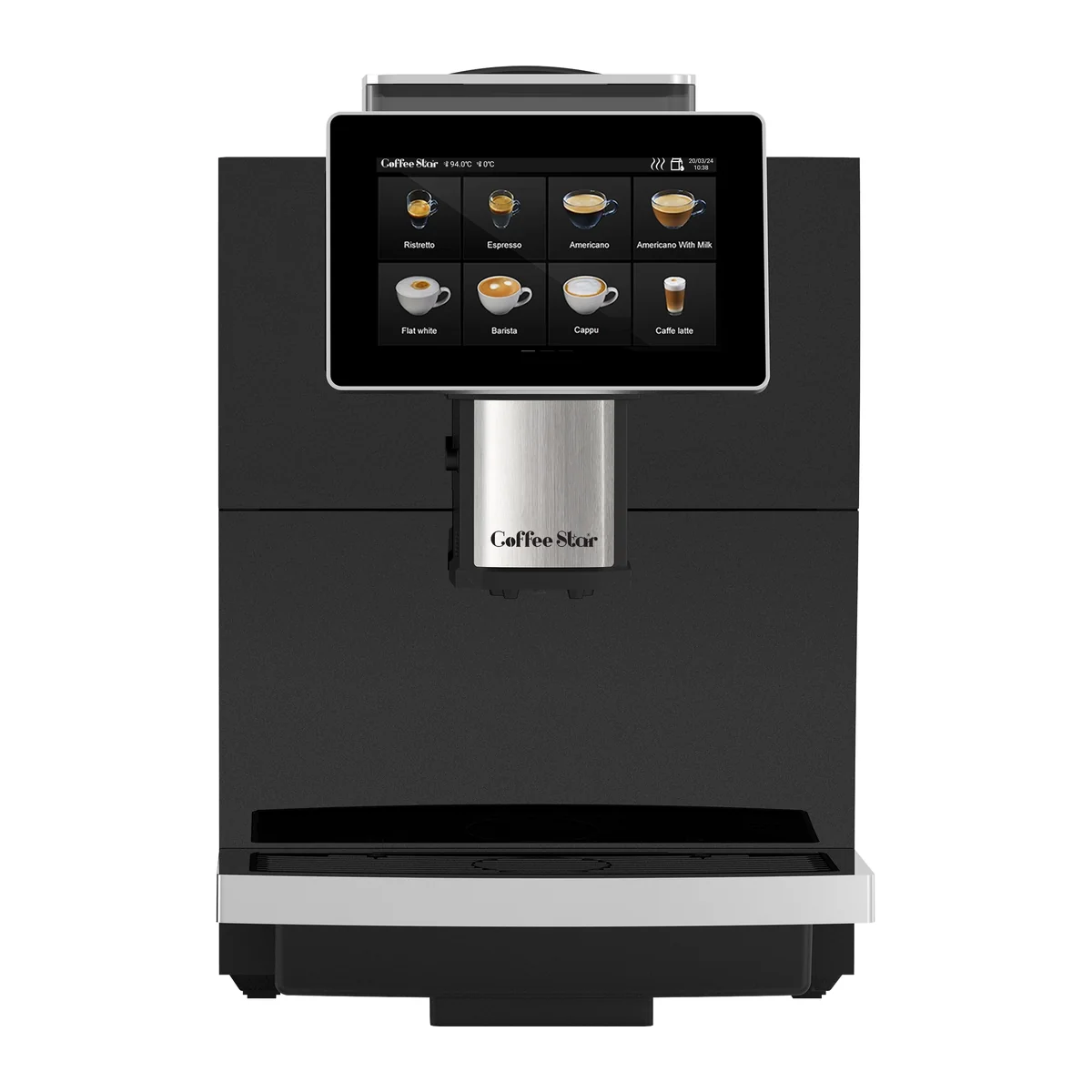
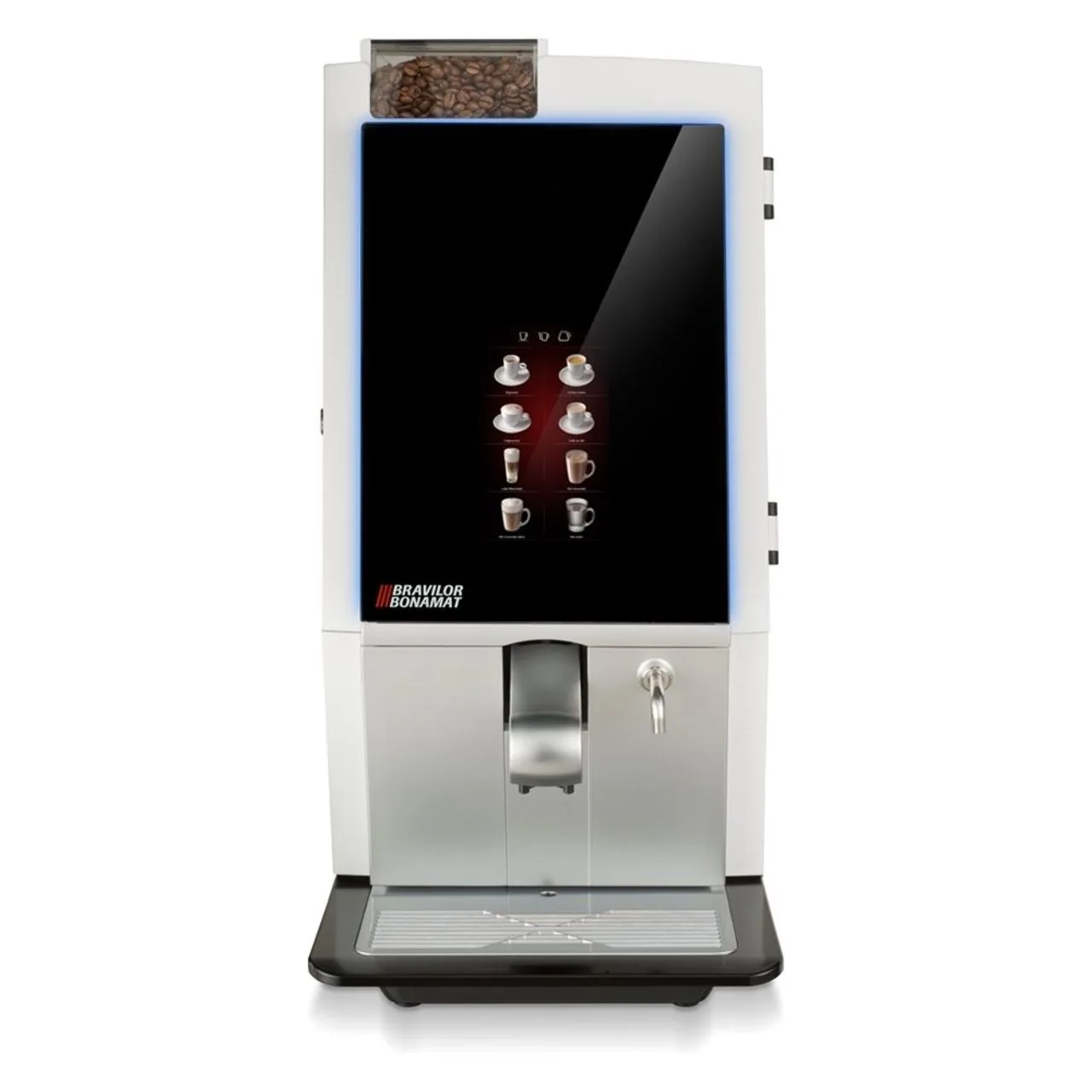
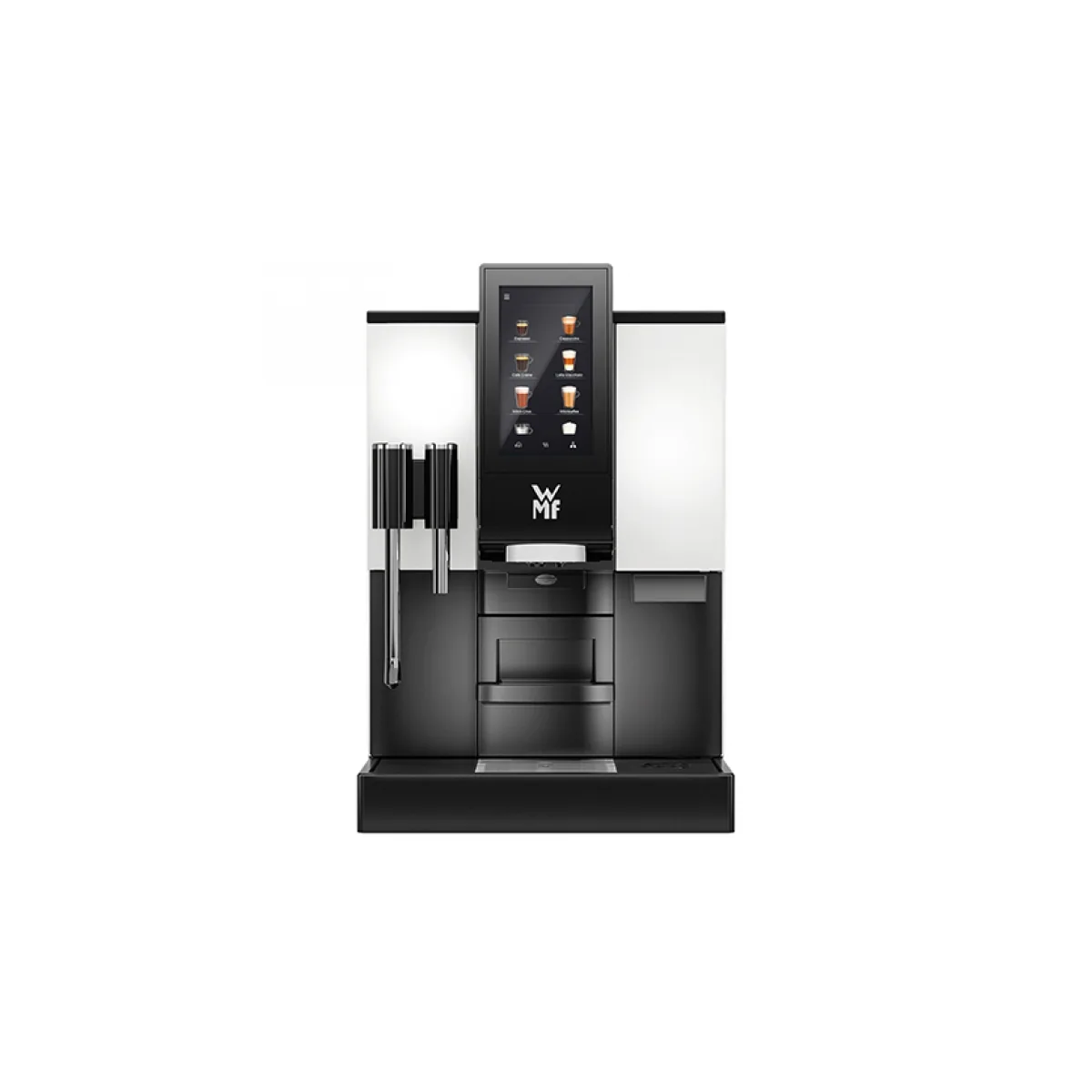
For daily workplace use, bean-to-cup wins on taste and waste. We unpack why in what a bean-to-cup office coffee service is, or browse the full Auto-Barista range.
3. Count the true cost, not the sticker price
The cheapest machine is rarely the cheapest coffee. Add the staff hours someone spends restocking and chasing suppliers, the downtime when a machine breaks with no service contract, and the café spend that quietly continues anyway. Once those are on the table, “doing it ourselves” usually looks very different. Use our ROI calculator for a 30-second estimate.
4. Match the service model to your situation
Suppliers offer some mix of three models — make sure you are comparing like for like:
- Subscription / rental — low or no upfront cost, machine + service bundled. Best for most offices that want it handled.
- Purchase outright — you own the machine; you arrange beans and servicing. Best if you have capex and in-house support.
- Managed / pay-per-cup — you pay for what you drink; the provider owns uptime. Best for high-traffic or multi-site setups.
Not sure which fits? Compare machines or see the full solutions overview.
5. Check the Malaysian essentials
This is where many imported brands quietly fall short — and where Malaysian corporate, GLC and government buyers tend to look first:
- Halal certification — Halal-recognised, for the coffee and the supply chain.
- Fairtrade & Organic — increasingly part of corporate ESG and procurement scoring.
- Local servicing, not an overseas hotline — technicians who can actually show up.
- Procurement-readiness — a locally-incorporated, Bumiputera-friendly supplier that can meet GLC and government tender requirements.
- Nationwide coverage — proven across multiple sites, not just the Klang Valley.
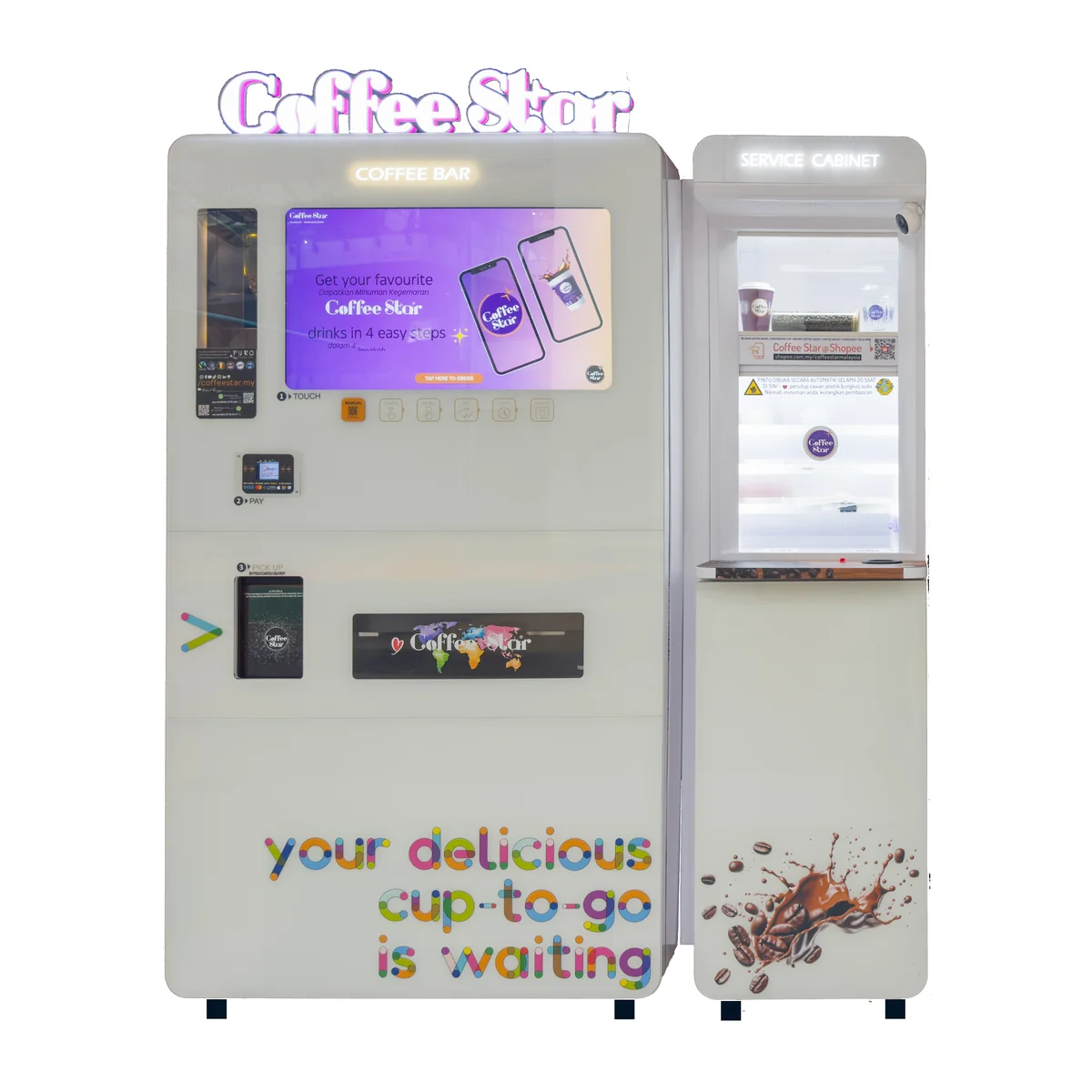
Coffee Star is Halal, Fairtrade and Organic certified, Malaysian-operated, and already running across 114+ Auto-Barista locations nationwide — including blue-chip and public-sector workplaces.
6. Pressure-test reliability and support
A machine is only as good as the service behind it. Ask any shortlisted supplier:
- How fast do you respond when a machine goes down, and is that an SLA in writing?
- Are machines remotely monitored, so faults and low stock are caught before we notice?
- Do beans, milk and supplies arrive automatically, or do we have to reorder?
- Can we upgrade or add machines as we grow, without starting a new contract?
Coffee Star’s Auto-Baristas are IoT-connected, so the service often works before you notice a problem — auto-replenishment and proactive, locally-serviced maintenance.
7. Run a trial before you commit
The single best way to de-risk the decision is to put a machine in your actual pantry and let your team use it for a week. You will learn more from five real days than from any brochure. We make that easy — request a free 1-week trial and we handle delivery, install and training.
The quick checklist
- Do we know our daily cup volume and drink mix?
- Is the machine type right for that volume (bean-to-cup for daily use)?
- Have we counted staff time, downtime and continuing café spend — not just the price?
- Does the service model (subscription / purchase / managed) fit how we want to run it?
- Halal (Halal-recognised), Fairtrade & Organic certified?
- Local servicing with a written response SLA?
- Remote monitoring + auto-replenishment of beans and milk?
- Procurement-ready for GLC / government if relevant?
- Can we trial it free before signing?
What is the best office coffee machine for a Malaysian office?
For daily in-office use, a bean-to-cup Auto-Barista gives the best taste-to-cost ratio with the least waste. Match the model to your daily cup volume — our Solution Finder helps in four questions.
Should we rent or buy an office coffee machine?
Renting or subscribing suits most offices — low upfront cost, with the machine and servicing bundled. Buying outright suits teams with capex and in-house support. High-traffic or multi-site setups often prefer a managed pay-per-cup model.
Is the supplier Halal-recognised?
It should be. Coffee Star is Halal (Halal-recognised), Fairtrade and Organic certified — which matters for Malaysian corporate, GLC and government workplaces.
Can we try before we commit?
Yes. Coffee Star offers a free 1-week trial — we deliver, install and train your team so you can judge it in real conditions. Request a trial.
Ready to shortlist with confidence?
Start a free 1-week trial, or estimate your savings in 30 seconds.
This guide is general planning advice, not a quotation. Talk to us for numbers tailored to your site.
Leave a Reply