Stories
The people in your pantry: office coffee in Malaysia in 2027
A new hire weighing the commute, a manager under pressure to fill desks, and a cup that can say “we thought about you”: seven predictions for workplace coffee in Malaysia in 2027, and what employers can do now.
In 2020, the year we started Coffee Star in Shah Alam, our Coffee ATMs poured more than 10,000 free cups for frontliners (Photo 1). Someone at the end of a long shift does not want a lecture on beans. They want to be noticed.
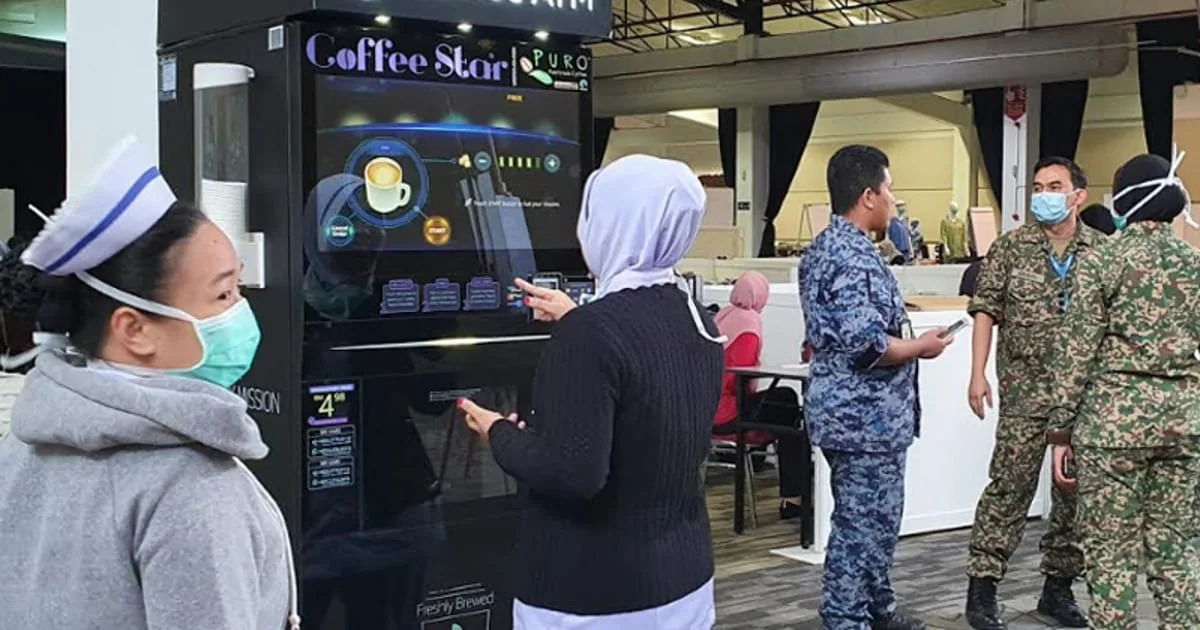
That is what each cup said, quietly: someone thought about you today.
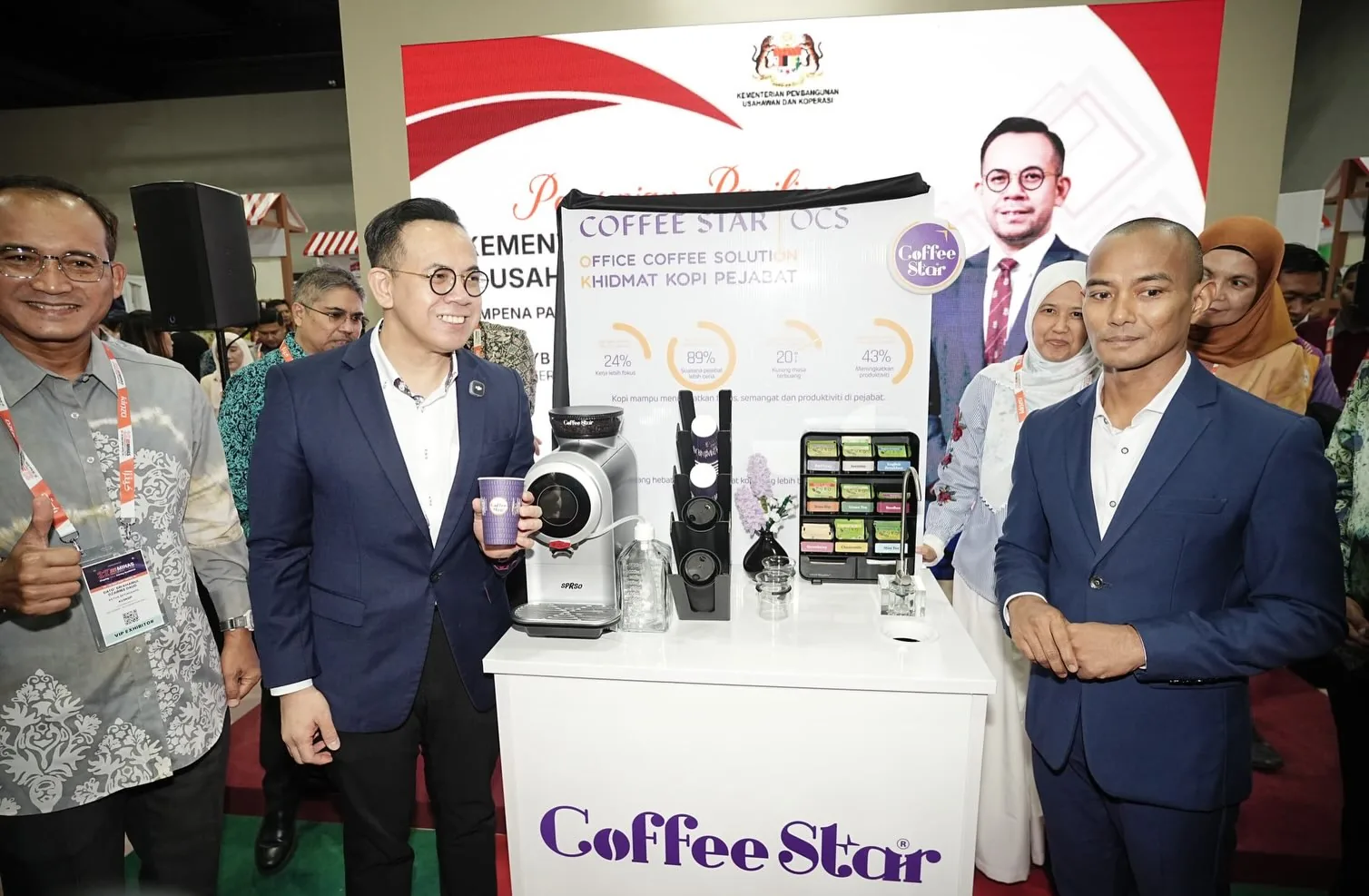
Six years on, our Auto-Baristas stand in more than 114 locations across Malaysia, and on 24 September we launched our Office Coffee Service at MIHAS 2026 (Photo 2). The machines got smarter. The lesson did not.
The cup is never only about the coffee. In 2027, I think it will say more, as Malaysian offices keep arguing over whether people should come in, and why.
Figure 1 sets out my seven predictions. I run a coffee company, so weigh them knowing I have a stake in them.
Figure 12027 at a glance
Seven predictions for office coffee in Malaysia in 2027
My forecasts for the year ahead, each argued below with the evidence behind it
- 1Prediction 1: The commute will have to be earned at the coffee point
- 2Prediction 2: Sachets and kettles stop passing as office coffee
- 3Prediction 3: Gen Z orders from the pantry as if it were a café
- 4Prediction 4: The coffee point becomes friendship infrastructure
- 5Prediction 5: The cup is read as a message: we thought about you
- 6Prediction 6: What is in the cup becomes a line in the ESG file
- 7Prediction 7: Offices subscribe to coffee instead of buying machines
Source: forecasts by Raja Ahmad Fauzan, Founder & CEO, Coffee Star (November 2026), not survey data
Two people at the coffee point
Picture a new graduate on a weekday morning: a train, a feeder bus and a walk in the heat. He passes a café selling a latte for under RM10 and runs a quiet sum: is today worth the trip?
Now picture his manager, with an attendance target to hit. Across Asia Pacific, half the companies in CBRE’s 2025 office survey linked attendance to performance reviews, up from 29% a year earlier.
They meet at the coffee point most mornings. One is deciding whether to stay. The other is trying to give him a reason to.
Randstad’s Workmonitor 2025 finds that tension across Malaysia (Figure 2): 43% would consider quitting over more office time, yet 91% find relationships easier in the workplace.
Figure 2Malaysia, 2025
Wary of more office time, yet relationships come easier in person
Malaysian workers by generation
- All Malaysia
- Gen Z
- Millennials
- Gen X
- Baby Boomers
Source: Randstad Malaysia, Workmonitor 2025 (Malaysian respondents)
View as table: Figure 2, Wary of more office time, yet relationships come easier in person
| Generation | Would consider quitting over more office time | Find relationships easier in the workplace |
|---|---|---|
| All Malaysia | 43% | 91% |
| Gen Z | 47% | 91% |
| Millennials | 47% | 93% |
| Gen X | 38% | 89% |
| Baby Boomers | 26% | 93% |
Malaysians are not refusing the office. They are refusing the office without a reason.
1. The commute will have to be earned, starting at the coffee point
My bet is that 2027 is the year Malaysian employers run out of memos. Mandates fill desks, but not with people who want to be there.
In Monash University Malaysia’s late-2025 sample, 80.5% of white-collar workers were fully on-site, yet only 27.1% would choose that (Figure 3).
Figure 3Malaysia, late 2025
In one Malaysian sample, most work fully on-site; few would choose to
Actual pattern in late 2025 (orange), then the patterns people would choose (purple)
- Fully on-site (late 2025)
- Would choose 3 days office, 2 at home (top choice)
- Would choose fully on-site
- Would choose 4 days office, 1 at home
- Would choose fully remote
Source: Monash University Malaysia, Employee Wellbeing Index 2026, via Malaysiakini; 238 white-collar workers, Oct–Nov 2025 (small sample)
View as table: Figure 3, In one Malaysian sample, most work fully on-site; few would choose to
| Work pattern | Value |
|---|---|
| Fully on-site (late 2025) | 80.5% |
| Would choose 3 days office, 2 at home (top choice) | 30.9% |
| Would choose fully on-site | 27.1% |
| Would choose 4 days office, 1 at home | 19.1% |
| Would choose fully remote | 9.3% |
The favourite was three days in and two at home, the week Malaysia’s civil service adopted for eligible officers on 1 August 2026. I expect private employers to follow.
Whether people come in is mostly settled; why they should is not. You can mandate a badge swipe. You cannot mandate a good morning.
2. The sachet and the kettle will stop passing as office coffee
Our graduate’s benchmark is not the pantry of 2019. Malaysia’s branded coffee shops grew 28% in a year to more than 3,330 outlets, according to World Coffee Portal data reported in January 2025.
Then he opens the pantry: 3-in-1 sachets and a kettle. Malaysia has no score for that moment yet, and we intend to measure it. The UK has one, and it is not kind (Figure 4).
Figure 4The UK, 2026
What the office pantry scores when someone checks
First tile: UK workplaces. Others: UK workplace coffee drinkers, 2026. No Malaysian equivalent yet.
- 89%of UK workplaces have a kettle and instant coffee, still the most common setup
- 4.8/10average score UK staff give the range of coffee at work
- 62%would pay for barista-made coffee from a café at work
Source: World Coffee Portal, The Coffee At Work Report UK 2026 (more than 2,000 UK workplace coffee drinkers)
View as table: Figure 4, What the office pantry scores when someone checks
| Measure | Value |
|---|---|
| of UK workplaces have a kettle and instant coffee, still the most common setup | 89% |
| average score UK staff give the range of coffee at work | 4.8/10 |
| would pay for barista-made coffee from a café at work | 62% |
Note the 62%: staff are not asking for something for nothing, only for coffee that holds its own against the café downstairs. Come 2027, the sachet will send a message here too, just not the one you meant.
3. Gen Z will order from the pantry as if it were a café
The office pantry was built for hot drinks. The next generation orders something else.
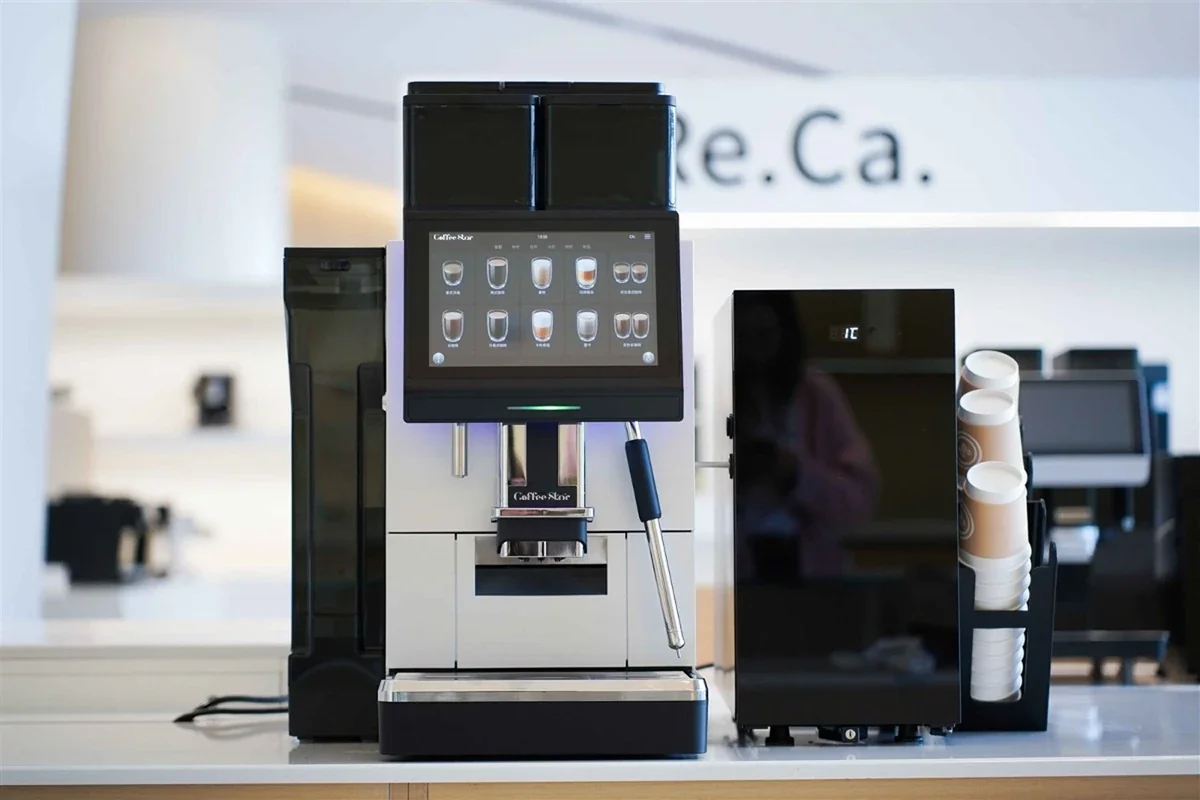
In Square UK’s May 2026 survey of 2,000 UK adults, 81% of Gen Z said they switch to iced coffee when it is hot (Figure 5). Milk drinks need a machine built for them, like the one in Photo 3.
Figure 5Taste, UK 2026
Who switches to iced coffee when it is hot
Share of UK adults, by generation
- All adults
- Millennials
- Gen Z
Source: Square UK research with OnePoll, 2,000 UK adults, May 2026, via Tea & Coffee Trade Journal
View as table: Figure 5, Who switches to iced coffee when it is hot
| Generation | Value |
|---|---|
| All adults | 47% |
| Millennials | 74% |
| Gen Z | 81% |
In Malaysia, “when it is hot” describes most of the year. My forecast, with no local data on Gen Z taste: in 2027, iced and milk-based drinks, with a plant-milk option, become the minimum a young hire expects.
A pantry that only pours hot coffee is designed for someone else.
4. The coffee point will become the office’s friendship infrastructure
Friendships at work rarely begin in meetings. They begin while the machine grinds, when the intern and the finance director wait for the same thing.
A 2017 survey run for Nespresso by ComRes, of 2,772 UK and Irish employees, measured what coffee breaks build, even with the boss (Figure 6). At our MAHA 2026 booth, people stopped to talk by the machine (Photo 4).
Figure 6Nespresso UK, 2017
What a coffee break builds
UK employees in a 2017 survey run for Nespresso by ComRes
- 8 in 1081% say coffee breaks have brought them closer to their colleagues
- 7 in 1072% of those who have coffee breaks with their manager say it has improved that working relationship
Source: Nespresso UK with ComRes, The hidden value of coffee and coffee breaks in the workplace (2017), a survey run for Nespresso; 2,772 UK and Irish employees, UK figures shown
View as table: Figure 6, What a coffee break builds
| Statement | Value |
|---|---|
| 81% say coffee breaks have brought them closer to their colleagues | 8 in 10 |
| 72% of those who have coffee breaks with their manager say it has improved that working relationship | 7 in 10 |
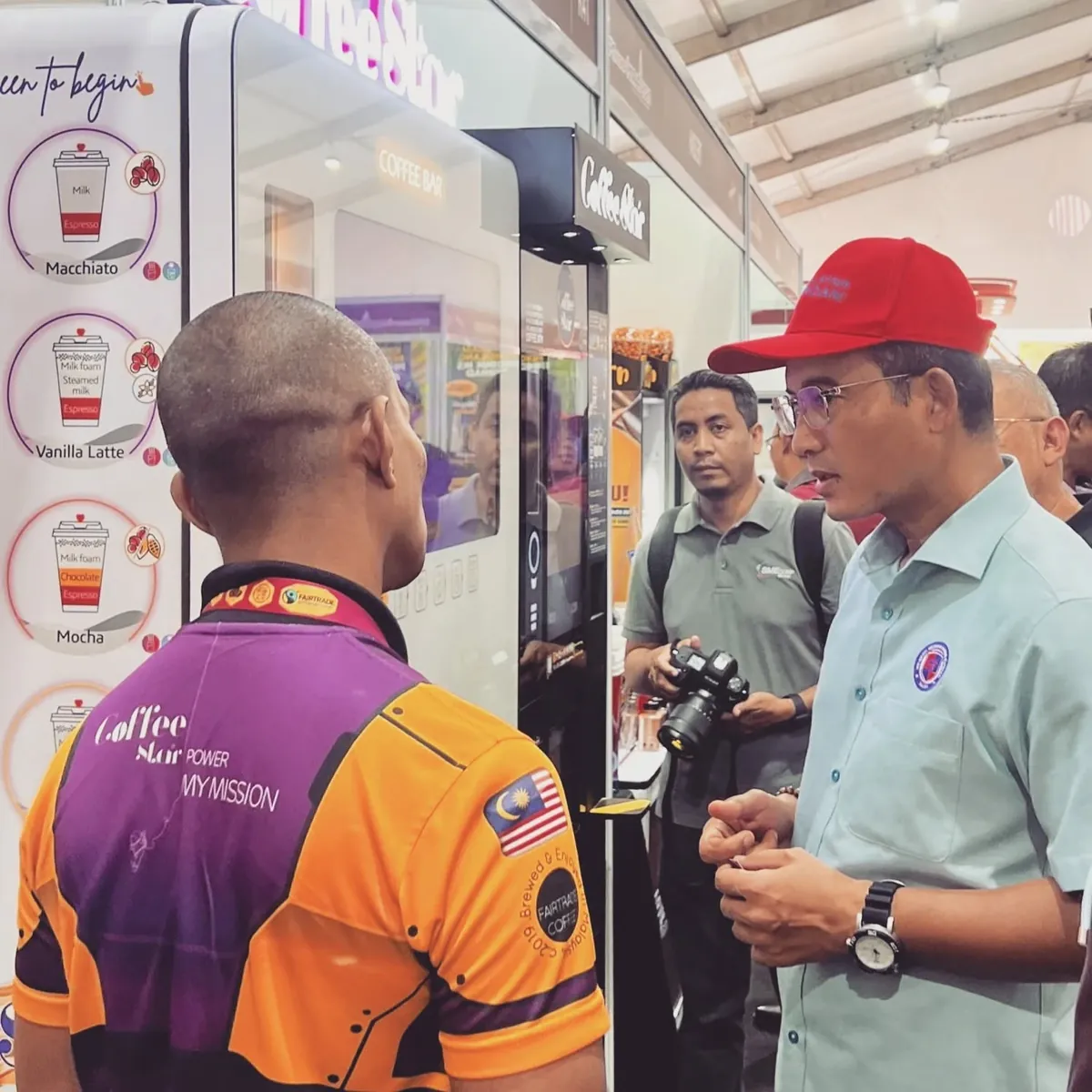
Belonging is the hinge. In 2027, I expect employers here to design for that minute.
A machine in a corridor is a utility. A coffee point with chairs is a culture.
5. The cup will be read as a message: we thought about you
This is our oldest lesson, and 2027 makes it louder. In the same Nespresso survey, 75% of UK employees said high-quality coffee at work would signal, at least to a degree, that their employer looks after their wellbeing.
They ranked it third of ten perks that improve the working day (Figure 7). A good cup still earns the smiles in Photo 5.
Figure 7Nespresso UK, 2017
Where good coffee ranks among workplace perks
Share of UK employees who say each perk improves their day, at least somewhat; top six of the ten tested
- Ergonomic office equipment
- Fresh fruit
- High-quality coffee
- Snacks
- Canteen
- High-quality tea
Source: Nespresso UK with ComRes, The hidden value of coffee and coffee breaks in the workplace (2017), a survey run for Nespresso; 2,772 UK and Irish employees, UK figures shown
View as table: Figure 7, Where good coffee ranks among workplace perks
| Perk | Value |
|---|---|
| Ergonomic office equipment | 69% |
| Fresh fruit | 64% |
| High-quality coffee | 63% |
| Snacks | 62% |
| Canteen | 61% |
| High-quality tea | 59% |
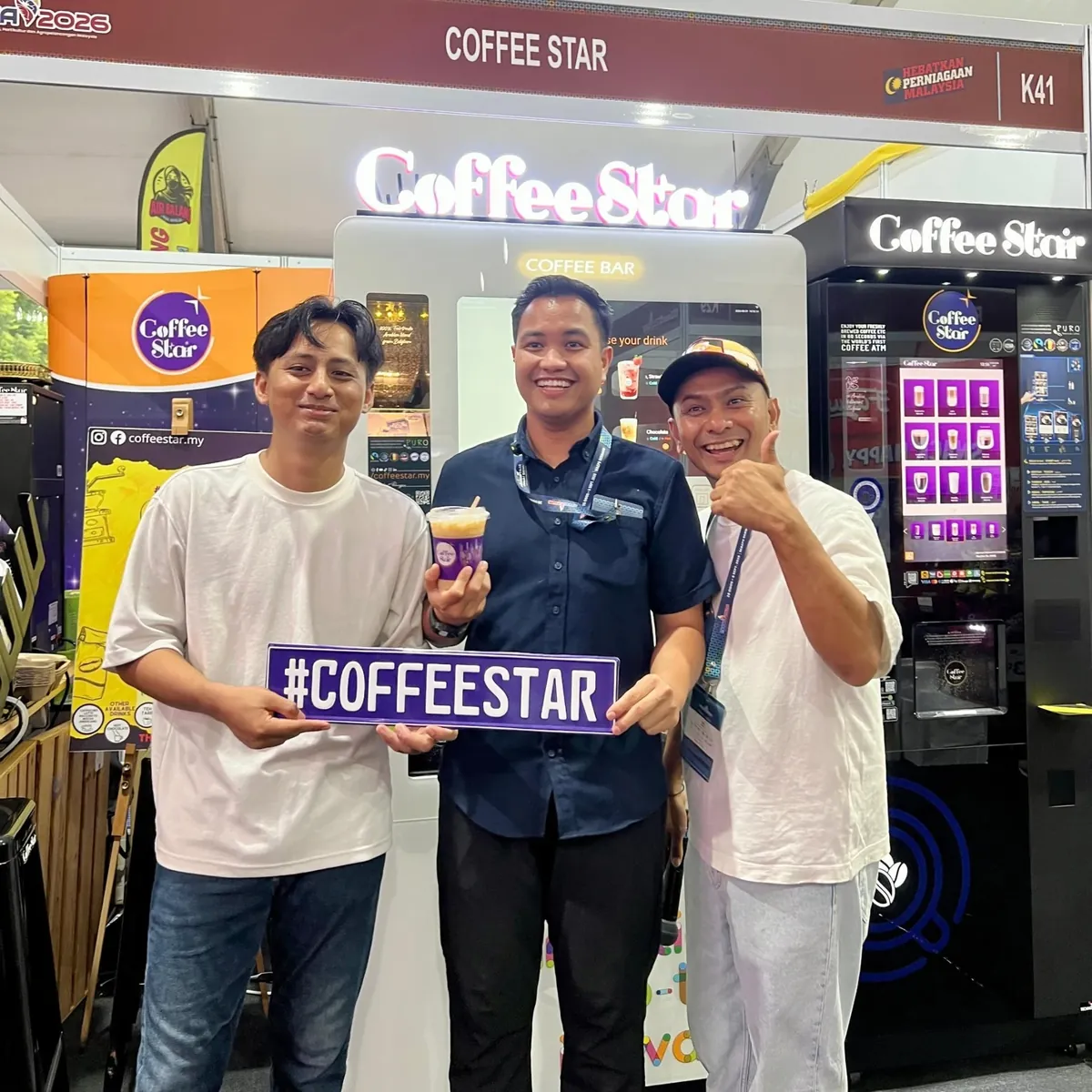
The honest part: when a 2025 survey of 916 Austrian coffee drinkers, also run for Nespresso Professional, asked a stricter question, only 22% said they place great value on high-quality coffee at work. How you ask matters.
My bet: the more of the week an office requires, the more closely staff will read what it gives. Coffee does not do the caring. It carries it.
6. What is in the cup will become a line in the ESG file
Our graduate reads labels, and he reads employers the same way. In Deloitte’s 2023 survey, 66% of Malaysian Gen Zs would pay more for sustainable products, and 51% had pressed their employer to act on climate change (Figure 8).
Figure 8Malaysian Gen Z
Young Malaysians on sustainability and climate action
Malaysian Gen Zs, 2023
- would pay more for products and services that are better for the planet
- have pressed their employer to act on climate change
Source: Deloitte 2023 Gen Z and Millennial Survey, Malaysian sample (201 Gen Zs of 303 respondents), via Malay Mail
View as table: Figure 8, Young Malaysians on sustainability and climate action
| Measure | Value |
|---|---|
| would pay more for products and services that are better for the planet | 66% |
| have pressed their employer to act on climate change | 51% |
From 2027, Malaysia’s sustainability reporting framework reaches ACE Market and large non-listed companies. Their procurement teams will likely ask coffee suppliers about origin and waste. The pantry is a supplier.
Our answer: Fairtrade and organic Puro beans roasted in Belgium by Miko. Coffee Star was named National Winner, SME ESG Challenge 2025/2026 (SME Corp Malaysia × UN Global Compact Network Malaysia, Brunei & Cambodia) for Bean2Blossom, which composts our spent grounds.
7. Offices will stop buying coffee machines and start subscribing to coffee
A good coffee machine is a small factory: beans, cleaning, servicing and someone watching it. Mordor Intelligence’s September 2026 forecast names rental and lease the fastest-growing route to market for office coffee machines, and Asia Pacific the fastest-growing region.
Risk is the other reason. The World Bank expects arabica to ease in 2027 but stay well above 2024, and warns that a strong El Niño could tighten markets again (Figure 9).
Figure 9Bean prices
Arabica eases in 2027, but stays well above 2024
World arabica price, US dollars per kilo: actual, then World Bank forecast
- $5.622024
- $8.472025
- $7.352026, forecast
- $7.202027, forecast
Source: World Bank, Commodity Markets Outlook, October 2026 (nominal prices; 2026 and 2027 are forecasts)
View as table: Figure 9, Arabica eases in 2027, but stays well above 2024
| Year | Value |
|---|---|
| 2024 | $5.62 |
| 2025 | $8.47 |
| 2026, forecast | $7.35 |
| 2027, forecast | $7.20 |
My bet is that Malaysian offices stop wanting to own a machine and its problems, and choose coffee that simply works, for one monthly fee, from a supplier who carries the bean risk.
What good looks like in 2027
Now picture a Tuesday that works. The graduate finds the drink he would have bought downstairs waiting upstairs, iced if he wants it. His manager is behind him in a short queue, because someone sized the coffee point for Tuesday.
Figure 10 maps the usual path from the kettle, and Photo 6 shows where it can lead.
Figure 10Your options
From kettle to fully managed: the main office coffee setups
Simplest first, drawing on UK and North American office coffee buying guides
- Step 1Kettle and sachetsQuick and familiar; instant can fall short for fresh-coffee drinkers
- Step 2Pod machineEasy, one cup at a time; used pods raise a waste question
- Step 3Bean-to-cup you ownFresh beans and café-style drinks; cleaning and repairs are yours
- Step 4Fully managed serviceMachine, beans, cleaning, servicing and monitoring on one subscription
Source: Coffee Star, drawing on buying guides from the Office Coffee Company (UK), Bruhub (Canada) and Staples Business Advantage (US)
View as table: Figure 10, From kettle to fully managed: the main office coffee setups
| Setup | What it means |
|---|---|
| Kettle and sachets | Quick and familiar; instant can fall short for fresh-coffee drinkers |
| Pod machine | Easy, one cup at a time; used pods raise a waste question |
| Bean-to-cup you own | Fresh beans and café-style drinks; cleaning and repairs are yours |
| Fully managed service | Machine, beans, cleaning, servicing and monitoring on one subscription |

For most offices, I believe the best solution for 2027 is a fully managed service: the machine, beans, cleaning, servicing and remote monitoring on one monthly subscription, so nobody spends the week chasing beans or a repair. It is the model we chose for our Office Coffee Service. Hold any supplier to it, ours included.
If you want to see which setup fits your office, answer a few questions in our Coffee Machine Finder here.
What I’d tell an employer choosing office coffee for 2027
None of this is about the machine. It is about what the machine says to the people who made the trip in. If you are the manager in our story, start here.
- Benchmark the pantry against the café your people pass, not the office of 2019.
- Ask your youngest hires what is missing, then add iced and milk-based drinks, with a plant-milk option.
- Size for your busiest day, and give people somewhere to stop, sit and talk.
- Choose Fairtrade, traceable beans, and ask where the spent grounds go.
- Rent rather than buy: one monthly fee, remote monitoring, and service times written into the contract.
- Ask about the Halal status of everything in the cup, from beans to milk.
- Taste it in your own office, with your own people, before you commit.
Six years ago, a free cup at the end of a hard shift taught us what office coffee is for. In 2027, I expect a new generation at the office door, asking: is this place worth the trip?
Some of these predictions will age badly, but I believe the answer can be yes, and that it often starts small: a good cup, made with care, where people stop and talk. If you see 2027 differently, write to talktous@coffeestar.my. I would rather argue over a good cup now than be surprised next year.
Raja Ahmad Fauzan
Founder & CEO, Coffee Star
Newsletter
Get the full 2027 outlook
Sign up for more data on coffee and work in Malaysia, and the full 2027 outlook when it is ready.
We use your details only to send the newsletter and reply if you write to us. One click to unsubscribe, every time. Personal data notice (PDPA 2010) on our newsletter page.
Sources
- New Straits Times, Coffee bean prices tumble, but will Malaysians pay less for their daily cup? (2026)
- CBRE, APAC office markets enforce stricter attendance protocols: 2025 Asia Pacific Office Occupier Survey, press release (2025)
- Randstad Malaysia, Workmonitor 2025: Impact of toxic work environments (2025)
- Malaysiakini, on Monash University Malaysia’s Employee Wellbeing Index 2026 (2026)
- Malay Mail, Eligible civil servants to work three days in office, two days from home under new hybrid policy (2026)
- New Straits Times, Malaysia’s lucrative coffee market, citing World Coffee Portal data (2025)
- World Coffee Portal, Workplaces: the next big opportunity for UK coffee businesses (2026)
- World Coffee Portal, The hidden £3.60 opportunity: UK workplace coffee is worth more than many suppliers imagine (2026)
- Tea & Coffee Trade Journal, As temperatures rise, more UK consumers grab iced coffees, on Square UK research (2026)
- Nespresso UK with ComRes (now Savanta), The hidden value of coffee and coffee breaks in the workplace (2017), a survey run for Nespresso; summary page by Savanta
- trend. (sponsored content with Nespresso), Was guter Kaffee über Unternehmen verrät, on Marketagent research for Nespresso Professional (2025)
- Malay Mail, Survey: Malaysian Gen-Zs and millennials have higher climate anxiety than global counterparts, on Deloitte’s 2023 Gen Z and Millennial Survey (2023)
- Securities Commission Malaysia, National Sustainability Reporting Framework to Enhance Sustainability Disclosures (2024)
- Mordor Intelligence, Office Coffee Machine Market Size & Share Analysis, 2026–2031 (2026)
- World Bank, Commodity Markets Outlook, October 2026 (2026)
- World Bank, Commodity Markets Outlook, October 2026: commodity price forecasts (2026)
- Office Coffee Company, Coffee machine guide (undated)
- Office Coffee Company, Guide to sourcing your next commercial coffee machine (undated)
- Bruhub, Office Coffee Buyer Guide (2025)
- Staples Business Advantage, Coffee-Service Program Buying Guide (undated)
Leave a Reply